
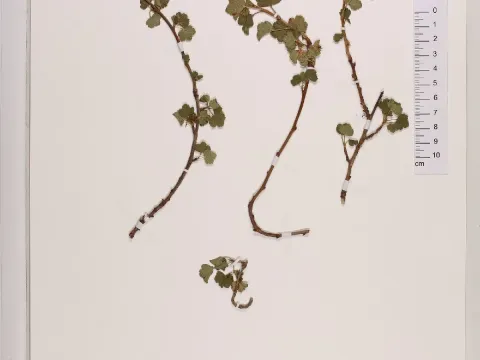
Eastern currant
Ribes orientale
Eastern currant (Ribes orientale) is a deciduous shrub belonging to the Grossulariaceae family. It is recognized for its glandular, pubescent branches and foliage, which often emit a distinct fragrance, distinguishing it from common commercial currant varieties.
What the section contains
Eastern currant
The species is native to mountainous regions stretching from Southeastern Europe through the Caucasus and into Central and Western Asia. It thrives in high-altitude environments, naturally occurring on rocky slopes and within mountain scrub communities.
To cultivate Ribes orientale successfully, one must replicate its natural preference for well-drained, alkaline, or neutral soils. The plant requires full sunlight exposure to maintain its structural integrity and encourage the development of its small, berry-like fruits.
The shrub is highly valued for its drought tolerance and general hardiness, making it an excellent candidate for xeriscaping or rock gardens. It does not require intensive irrigation, provided the planting site is correctly prepared with adequate drainage systems.
From a horticultural standpoint, its role is largely ornamental and genetic. Because it possesses inherent resilience to environmental stressors, researchers often use this species to cross-breed for more robust, disease-resistant commercial currant cultivars.
Common health issues include fungal infections such as powdery mildew, especially if the air circulation around the canopy is poor. Ensuring adequate spacing between plants is a primary strategy for preventing the spread of these pathogens.
In terms of pests, the plant is susceptible to aphid infestations and mite outbreaks that can curl the leaves. Integrated pest management, including monitoring and targeted mineral oil applications, is effective for keeping the plants healthy during the active growth season.