
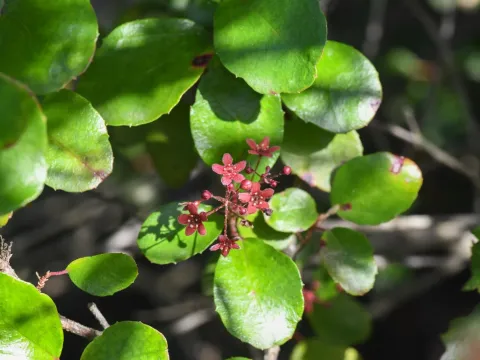
Evergreen currant
Ribes viburnifolium
Evergreen currant (Ribes viburnifolium) is a unique, shade-loving shrub from the Grossulariaceae family. Unlike common fruiting currants, this species is primarily cultivated for its aesthetic appeal, featuring attractive, dark green, evergreen foliage and a low, spreading growth habit.
What the section contains
Evergreen currant
Native to the Channel Islands off the coast of Southern California and parts of Baja California, this plant is well-adapted to Mediterranean climates. It thrives in mild conditions where it can maintain its lush leaves throughout the entire calendar year.
When selecting a site for cultivation, it is essential to provide partial to full shade, especially in hotter inland areas. While the shrub is relatively drought-tolerant once established, it prefers a well-draining soil structure rich in organic matter to perform at its best.
The cultural requirements include moderate watering during the first growing season to develop a deep root system. Once mature, the plant becomes remarkably self-sufficient, requiring minimal supplemental irrigation unless subjected to severe, prolonged dry spells.
In landscape design, this species is highly valued for its versatility. It is frequently used as a groundcover to prevent soil erosion on slopes, as a foundation planting in shaded beds, or as an understory element in native plant gardens where other shrubs might fail.
Like many species in the Ribes genus, the evergreen currant can be susceptible to powdery mildew if airflow is restricted. To mitigate this risk, gardeners should ensure adequate spacing between individual plants and avoid planting in areas with poor natural ventilation.
Common garden pests such as aphids and spider mites may occasionally infest the foliage, particularly during warmer, drier weather. Monitoring the undersides of the leaves during regular maintenance sessions is the most effective way to detect early stages of pest activity.
Root rot is a significant danger if the soil remains waterlogged for extended periods. To prevent this, growers must ensure that the planting site has excellent drainage, adding gravel or amendments to heavier soils to facilitate the movement of excess water away from the root zone.
Pruning is an essential maintenance practice that serves both aesthetic and sanitary purposes. By thinning out crowded branches and removing dead wood, you improve light penetration and air circulation, creating an environment less favorable for fungal pathogens.
While the plant is generally hardy, avoiding overhead watering in the evening helps keep the foliage dry, which is a key strategy for preventing common leaf-spot diseases. If an infestation occurs, integrated pest management practices should be employed to protect the plant's health.