
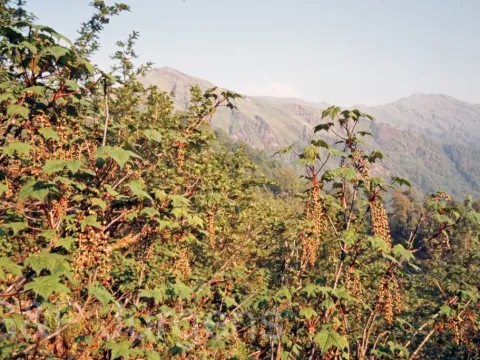
Glacial currant
Ribes glaciale
The Glacial currant (Ribes glaciale) is a deciduous shrub belonging to the Grossulariaceae family, native to the high-altitude regions of the Himalayas.
What the section contains
Glacial currant
This species is exceptionally well-adapted to cold mountain environments, often thriving near the snow line, which makes it a unique candidate for cool-climate gardening.
It requires moist, well-draining, and nutrient-rich soils that mimic the forest floor or mountain slope conditions found in its natural habitat.
The plant demonstrates high tolerance to frost but struggles in regions with hot, dry summers, requiring shade and consistent soil moisture for optimal health.
In a cultivation setting, it is essential to replicate its natural environment by providing shelter from intense sunlight and ensuring the soil remains cool.
The economic use of Ribes glaciale is limited as its berries are small and generally considered inferior in taste compared to commercial currant varieties.
Yields are typically low for wild populations, with harvesting occurring mostly on a subsistence basis within the native range of the species.
The main agricultural value of this plant lies in its potential as a genetic resource for breeding programs aiming to develop cold-hardy currant cultivars.
Because the berries are not mass-produced, there are no established commercial yield standards for this specific species on a global scale.
Small-scale production might focus on niche markets or medicinal plant gardens, where the hardiness of the shrub is considered a primary advantage.
Like many species in the genus Ribes, this currant is susceptible to powdery mildew, which can significantly affect foliage if humidity levels are not controlled.
Anthracnose and other fungal leaf spot diseases can pose a threat, especially in environments where air circulation around the shrub is insufficient.
Pests such as aphids and spider mites are common problems that tend to infest new shoots, hindering the overall development of the plant during the growing season.
Poor soil drainage can lead to root rot, a common issue when the plant is moved from its high-altitude habitat to lowland garden conditions.
Integrated pest management, including pruning and the use of appropriate fungicides, is necessary to maintain the health of Ribes glaciale in a managed garden.