
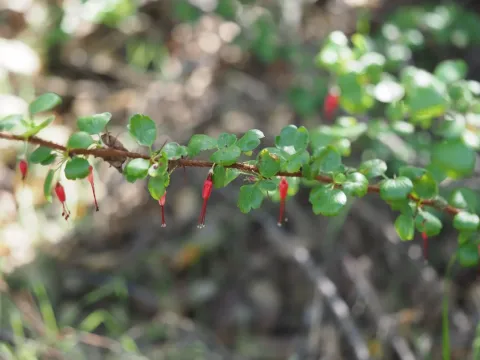
Fuchsia-flowered gooseberry
Ribes speciosum
The Fuchsia-flowered gooseberry (Ribes speciosum) is a distinctive member of the Grossulariaceae family. Renowned for its stunning, pendulous red flowers that resemble those of a fuchsia, it serves primarily as an ornamental shrub rather than a commercial berry crop.
What the section contains
Fuchsia-flowered gooseberry
Native to the coastal ranges of California, this shrub thrives in Mediterranean-type climates. It requires significant warmth and is not particularly frost-hardy, making it suitable for gardens in mild temperate zones where winter temperatures do not plummet for extended periods.
Ideal soil conditions include well-draining, slightly acidic to neutral soil. The plant does not tolerate waterlogging, so ensuring excellent drainage is critical to prevent root rot, especially during seasons with heavy or frequent rainfall.
Agrotechnical maintenance involves consistent but moderate irrigation, allowing the soil to partially dry between waterings. Fertilization with a balanced slow-release formula in early spring supports healthy vegetative growth and maximizes floral display during the blooming season.
Botanically, the plant is characterized by its stiff, thorny branches and glossy, dark green leaves. When planning the landscape, it is important to provide sufficient space for the shrub to spread and to plant it away from high-traffic paths due to the presence of sharp spines.
Aphids are the most common pests affecting Ribes speciosum, often clustering on the tender new growth. Early detection and the use of insecticidal soaps or neem oil can effectively manage populations without harming the plant's delicate tissues.
Powdery mildew represents a significant fungal threat, particularly in locations with poor air circulation or high humidity. Maintaining open canopy structure through strategic pruning is the best preventive measure to discourage the development of white fungal patches.
Rust infections can occur during wet summers, manifesting as orange pustules on the undersides of leaves. Removing and destroying affected foliage is essential to prevent the spread of spores, followed by the application of appropriate copper-based fungicides if the infection persists.
Spider mites may infest the shrub during prolonged hot and dry spells. Increasing local humidity through strategic misting and ensuring the plant is not under drought stress can minimize the susceptibility to these microscopic pests.
General garden hygiene, such as the thorough removal of leaf litter in autumn, reduces the overwintering sites for many pathogens. A proactive approach to plant health keeps the shrub vigorous and less attractive to common garden pests.