
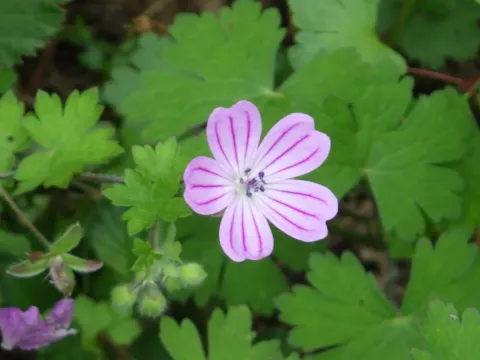
Geranium albanum
Geranium albanum
Geranium albanum is a resilient herbaceous perennial belonging to the Geraniaceae family, prized for its natural beauty and low-maintenance characteristics in garden settings.
What the section contains
Geranium albanum
Propagation is typically achieved through seeds sown in autumn or spring, requiring a brief period of stratification to break dormancy and ensure uniform germination rates.
When sowing in open ground, seeds should be lightly covered with fine soil or compost to maintain moisture while allowing adequate light penetration for the seedlings.
Vegetative propagation via root division is highly effective and should be performed during the plant's dormant period, either early in spring or late in autumn.
Proper spacing is crucial for long-term health; plants should be set roughly 30–40 centimeters apart to allow for airflow and prevent the development of fungal pathogens.
This species thrives in well-drained, fertile soil with a neutral to slightly acidic pH, making it an excellent choice for rocky gardens or well-structured borders.
While it adapts well to various lighting conditions, the best performance in terms of flower density is achieved when placed in full sun or partial shade locations.
Watering requirements are moderate; the plant is known for its impressive drought tolerance, yet it benefits from consistent moisture during the peak summer heat.
The plant demonstrates high hardiness, capable of surviving harsh winters, which aligns with its origins in mountainous regions where temperature fluctuations are common.
Applying a balanced granular fertilizer in early spring supports vigorous growth and enhances the flowering period, ensuring the plant remains robust throughout the season.
Fungal issues, particularly powdery mildew, can occur in areas with poor ventilation or consistently high humidity levels throughout the late spring and summer months.
Gray mold (Botrytis) may occasionally affect the foliage, especially if debris is allowed to accumulate around the base of the plant during rainy spells.
Insects like aphids or spider mites can pose a threat during prolonged dry periods, necessitating visual monitoring and the use of targeted control measures if populations spike.
Integrated pest management, including regular inspection and the use of insecticidal soaps, is often sufficient to maintain plant health without harmful chemical intervention.
Maintaining a clean growing area by removing wilted leaves and spent organic matter effectively mitigates the risk of most common garden diseases affecting this species.
The primary use of Geranium albanum is in ornamental horticulture, where it serves as a reliable groundcover or an attractive element in rock gardens.
For seed collection, the capsules must be monitored closely; as soon as they turn brown, they should be harvested before the seeds are naturally dispersed by the plant.
Deadheading spent flowers throughout the summer is a recommended maintenance practice that promotes a tidier appearance and may trigger a secondary wave of blossoms.
Late-season maintenance involves cutting back the foliage to the base once the plant enters dormancy, preparing it for a dormant winter period under the soil.
As a garden plant, its ability to cover bare soil helps reduce erosion and competition from invasive weeds, making it a valuable addition to sustainable garden designs.