
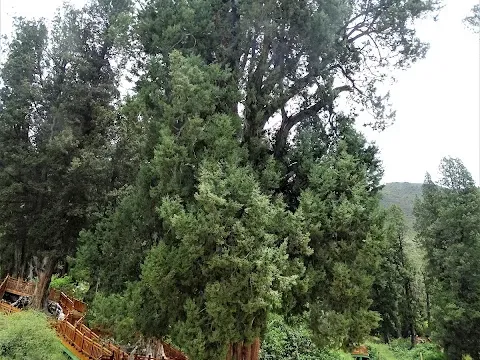
Giant cypress
Cupressus gigantea
Sowing seeds of Cupressus gigantea in nurseries is typically performed in the spring, once soil temperatures reach 10-12 degrees Celsius.
What the section contains
Giant cypress
Seeds require a period of cold stratification lasting several months to ensure successful germination and higher emergence rates.
The planting substrate should be a well-aerated mix of peat, sand, and organic matter to support early root system development.
Seeds are sown at a depth of approximately 1-2 centimeters, followed by mulching to maintain consistent soil moisture levels during germination.
For commercial propagation, greenhouse conditions or cold frames are often used to protect young seedlings from extreme weather fluctuations.
The Giant Cypress is native to high-altitude regions and thrives in environments with high solar radiation and good air circulation.
This species requires well-drained soils, as waterlogged conditions are detrimental to root health and often lead to fungal pathogens.
It shows excellent cold hardiness, making it suitable for reforestation efforts in mountainous or northern temperate climate zones.
The ideal soil profile is a slightly acidic to neutral loam that remains rich in nutrients and provides a stable physical structure.
Protection from severe winds during the establishment phase is essential to prevent desiccation and physical damage to young trees.
The primary economic value of the Giant Cypress lies in its potential for sustainable timber production in high-altitude plantations.
The biomass accumulation is steady, allowing for the harvest of valuable wood known for its resistance to decay and insects.
Mature specimens can grow quite large, providing significant wood volume per hectare under optimized management conditions.
Beyond timber, these trees are highly valued in landscape architecture for their imposing size and evergreen appearance.
Proper silvicultural practices, including thinning and pruning, help maximize the yield and quality of the final wood products.
Root rot caused by various fungi is a major threat, particularly in poorly drained soils or areas with excessive humidity.
Pests like spider mites and scale insects may infest the foliage, especially in drier environments with poor air flow.
Disease control involves regular monitoring, the use of appropriate fungicides, and maintaining proper plant spacing.
Removing dead or diseased branches helps maintain the structural integrity and health of the entire forest stand.
Effective pest management relies on keeping the trees vigorous through adequate site selection and balanced fertilization.
Timber harvesting is conducted after the trees reach technical maturity, following long-term forest management plans.
Seed harvesting involves collecting mature cones in the autumn before they naturally open to disperse their seeds on the ground.
Collected cones are dried in controlled environments to release seeds, which are then cleaned and tested for viability.
Careful extraction procedures are required to ensure that the genetic potential and quality of the seeds are preserved.
Modern logging techniques ensure efficient harvesting while minimizing the impact on the forest floor and surrounding ecosystem.