
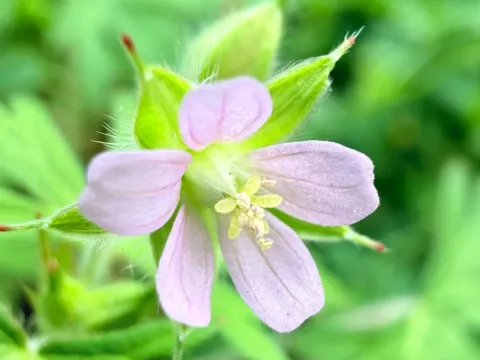
Carolina geranium
Geranium carolinianum
Carolina geranium is a hardy annual or biennial species that propagates primarily through seeds. Germination typically occurs in the fall or early spring, allowing the plant to establish itself ahead of many spring crops.
What the section contains
Carolina geranium
The seeds exhibit a high level of dormancy and can survive for several years in the soil seed bank. Field monitoring is crucial during the early stages of the growing season to detect and suppress emerging seedlings.
For agricultural control, tillage operations should be performed before the plant reaches the rosette stage. Once established, the taproot makes mechanical removal more difficult and labor-intensive.
The germination process is highly dependent on moisture levels and temperature fluctuations in the topsoil. Warm springs often lead to mass germination events across agricultural fields.
Effective management requires a combination of pre-emergence herbicides and mechanical cultivation to disrupt the life cycle before seed head maturation occurs.
This species thrives in well-drained soils, often colonizing sandy or loamy textures found in disturbed sites and agricultural fields. It is highly adaptable to various lighting conditions, from full sun to partial shade.
While the plant has moderate soil fertility requirements, it prefers soils with a neutral pH. It is sensitive to waterlogged conditions, which inhibit root development and overall plant vigor.
The optimal temperature range for growth is moderate, although the plant displays significant resilience to cool spring weather. It can withstand light frosts, which often gives it a competitive edge over other plants.
Moisture availability is key to sustaining growth during the vegetative phase. Drought conditions may cause the plant to temporarily cease growth, but it retains the ability to recover rapidly once moisture returns.
Carolina geranium is an indicator species for disturbed land, and its presence often signals that the soil surface has been recently exposed or cleared of competing vegetation.
As a member of the Geraniaceae family, this species can act as a reservoir for various plant viruses and pathogens. This makes it a potential threat to neighboring high-value agricultural crops.
Typical insect pests include aphids, which feed on the sap and can facilitate the transmission of viral diseases. Regular scouting is required to prevent the buildup of pest populations.
Fungal diseases, such as powdery mildew, frequently affect the leaves under humid conditions. If left unchecked, these pathogens can spread to nearby field crops, reducing total yield quality.
Root system health is often compromised by soil-borne nematodes, which can stunt the growth of the geranium and complicate management efforts in field environments.
- Powdery mildew
- Aphids
- Root-knot nematodes
- Rust fungi