
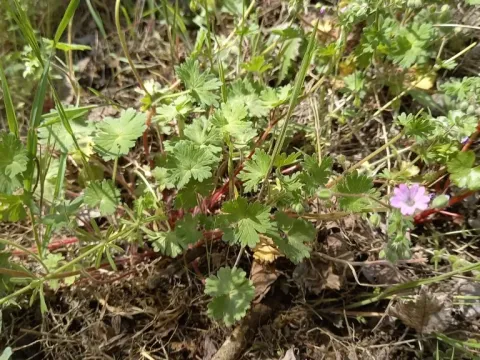
Brutium geranium
Geranium brutium
Brutium geranium (Geranium brutium) is a perennial herbaceous plant belonging to the Geraniaceae family. Native to Southern Europe, it is well-adapted to the climatic conditions of the Mediterranean region, showcasing resilience and aesthetic appeal in temperate zones.
What the section contains
Brutium geranium
The plant features distinctively dissected foliage and characteristic five-petaled flowers, which are typical for the Geranium genus. Depending on the environment, it can form dense mounds, making it a suitable candidate for managed landscape areas and specialized gardens.
Climatic requirements focus on a balance of warmth and protection from extreme temperature fluctuations. While it thrives in sunshine, it appreciates some shade during the hottest parts of the day to prevent leaf scorch and ensure continuous growth throughout the season.
Soil composition is critical for this species; it requires well-draining, nutrient-rich soil to prevent root issues. Heavy, compacted soils should be improved with organic matter or grit to ensure adequate aeration and drainage, which are essential for long-term survival.
Cultivation practices involve consistent watering, especially during the establishment phase and peak summer heat. Fertilization should be applied moderately, focusing on promoting both vegetative growth and flower production without stimulating excessive, weak stems.
The primary threats to Geranium brutium include various fungal pathogens, most notably powdery mildew. This condition often thrives in stagnant, humid air, necessitating good spacing between plants and careful watering habits to keep foliage as dry as possible.
Pests such as aphids and spider mites can affect the plants, particularly in dry and warm weather conditions. These insects target tender new growth, which can stunt the development of the plant and reduce its overall vitality if left unchecked.
Management strategies involve the use of targeted fungicides to address fungal outbreaks and appropriate miticides or insecticides for pest control. Integrated pest management practices are recommended to minimize chemical exposure and protect beneficial local insects.
Sanitation practices are essential for disease prevention, including the removal of dead leaves and debris where pathogens might overwinter. Keeping the garden bed clean reduces the pressure from pests and diseases significantly throughout the growing year.
Monitoring the plant health frequently allows for early intervention, which is key to maintaining the plant's health. By ensuring correct environmental conditions and applying timely maintenance, growers can effectively protect this species from common stressors.