
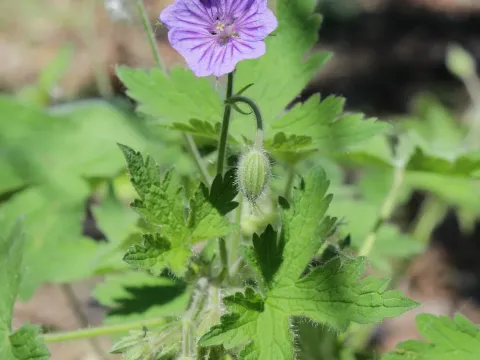
Bohemian cranesbill
Geranium bohemicum
Geranium bohemicum is a distinctive pyrophyte, meaning its germination process is historically triggered by the heat associated with forest fires.
What the section contains
Bohemian cranesbill
When cultivating this species, timing is crucial; sowing should occur in early spring to leverage the natural warming of the topsoil layers.
The seeds possess a long-term dormancy mechanism, allowing them to remain viable in the soil seed bank for decades until conditions become favorable.
Strategic placement in disturbed soil areas significantly increases germination rates, as the plant is naturally adapted to colonize clearings and burns.
Providing optimal seed-to-soil contact without deep burial is essential, as the light-sensitive nature of the seeds governs their successful emergence.
Belonging to the Geraniaceae family, the Bohemian cranesbill is a herbaceous plant characterized by its specific adaptation to open, high-light habitats.
Sunlight is the primary growth requirement; the species is highly sensitive to canopy closure and will not thrive in shaded woodland environments.
Ideal soil conditions consist of well-drained, nutrient-rich substrates that allow for excellent aeration and prevent water logging around the root system.
The climate must be characterized by temperate conditions, providing a sufficient frost-free period for the completion of the annual flowering cycle.
Water management is critical during the establishment phase, ensuring the soil remains moist but not saturated to avoid physiological stress.
The primary threat to the species is the loss of suitable habitat due to fire suppression policies, which prevents the natural regeneration of the population.
Invasive plant species pose a significant threat by outcompeting the cranesbill for space and light resources in its endemic zones.
Pathogenic threats include fungal infections, particularly leaf spot diseases, which can manifest in high-humidity conditions with poor ventilation.
While insect pests are generally not a major concern, aphids can occasionally infest plants during prolonged heat waves, necessitating careful monitoring.
Soil compaction serves as a major limiting factor for growth, as the plant requires friable soil structures to support its delicate root network.