
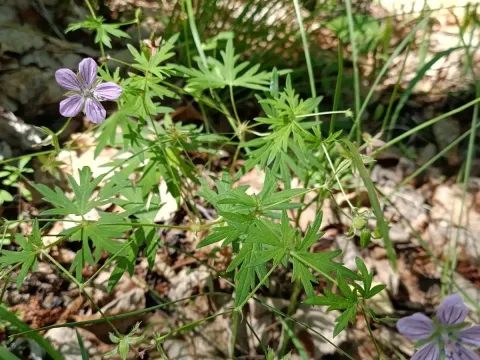
Dahurian cranesbill
Geranium dahuricum
Dahurian cranesbill is a perennial herbaceous plant that is typically propagated through seeds or by dividing mature, healthy rootstocks.
What the section contains
Dahurian cranesbill
Direct sowing in autumn is highly recommended, as the seeds benefit significantly from winter stratification to improve germination rates in spring.
For spring sowing, seeds must undergo cold stratification in a refrigerator for at least a month to break dormancy and ensure uniform seedling growth.
Seeds should be planted at a shallow depth of approximately 1 to 2 centimeters, ensuring the soil remains moist but not waterlogged during germination.
Once established, the plants prefer spacing of about 30 to 40 centimeters apart to allow for proper air circulation and expansion of the foliage.
This species thrives in sunny environments but is remarkably adaptable, capable of growing well in semi-shaded areas typical of forest edges.
The soil should be rich in organic matter, well-draining, and maintain a near-neutral pH to support the plant's robust metabolic development.
Being native to regions with cold climates, Dahurian cranesbill is highly frost-hardy and can withstand harsh winter conditions without protection.
Consistent moisture is necessary during the active growth phase, yet the plant is sensitive to stagnant water, which can trigger root rot.
Maintenance involves regular weeding and light fertilization with balanced nutrients during the budding stage to enhance vegetative production.
The agricultural value of Geranium dahuricum lies primarily in its biomass, which contains high levels of tannins and bioactive compounds.
Harvesting the aerial parts is best conducted during full bloom to ensure that the concentration of therapeutic constituents is at its peak level.
Roots are harvested in late autumn after the foliage has died back, which is the time when the plant's energy is concentrated underground.
Average yield depends on planting density and soil fertility, with consistent management practices yielding significant amounts of raw botanical material.
The processed material is valued in the pharmaceutical industry for its anti-inflammatory and antiseptic properties, making it a niche but stable crop.
The most common disease affecting this crop is powdery mildew, which often appears when plant density is too high and ventilation is poor.
Pests such as aphids and various leaf-eating beetles can cause structural damage to the foliage, especially during the early spring growth flush.
Root system issues often arise from overwatering or poorly drained heavy soils, leading to fungal decay and reduced overall plant vitality.
Implementing integrated pest management (IPM) strategies, including biological controls, is essential for maintaining the quality of the raw material.
Rotating crops and ensuring good field sanitation after harvest are vital practices to mitigate the buildup of soil-borne pathogens and pests.
Harvesting the aerial parts is done using mechanical harvesters during a dry spell in the flowering season to prevent mold development during storage.
Immediately after cutting, the material is transferred to drying facilities where it is processed at controlled temperatures to retain its chemical integrity.
Roots are excavated using specialized equipment, cleaned thoroughly to remove soil residue, and subsequently dried in a well-ventilated space.
Final product moisture content must be carefully controlled, ideally staying below 14 percent, to ensure long-term stability and prevent degradation.
The dried herbs should be packaged in breathable, moisture-resistant materials and stored in a cool, dark environment to preserve their medicinal properties.