
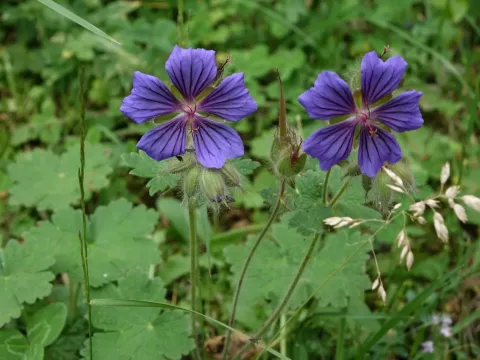
Broad-petaled cranesbill
Geranium platypetalum
Geranium platypetalum is a member of the Geraniaceae family, known for its robust perennial nature and high decorative value in various planting schemes.
What the section contains
Broad-petaled cranesbill
The most effective method of propagation is the division of rhizomes, which is best performed in early spring or autumn to ensure successful establishment.
When propagating by seeds, they should ideally be sown in autumn to benefit from natural stratification, which enhances the germination rate in the following spring.
When transplanting into the field, ensure a spacing of at least 30–40 cm between plants to provide enough room for the development of the foliage canopy.
Proper site preparation, including the incorporation of organic matter, helps the plants establish quickly during their first growing season after initial planting.
This species thrives in sunny locations but can also tolerate partial shade, making it a versatile option for different types of garden beds and borders.
Well-drained soil is essential for the health of Geranium platypetalum, as waterlogged conditions can lead to root rot and other physiological issues.
The plant is highly winter-hardy and does not require special protection against cold, allowing it to survive harsh winter conditions in many temperate climates.
While the plant is drought-tolerant once established, providing regular water during extreme dry spells will promote more abundant and prolonged flowering.
Regular maintenance involves light feeding with balanced fertilizers in early spring, which supports overall plant vigor and improves the density of the foliage.
The main threats to this crop include fungal diseases such as powdery mildew, which are typically associated with poor air circulation and excessive humidity.
Effective management includes removing dead leaves and ensuring sufficient spacing between plants to prevent the buildup of moisture around the base.
Insect pests are generally not a significant problem for Geranium platypetalum, as the plants contain essential oils that naturally repel many common insects.
Regular monitoring for signs of leaf spots is recommended, especially in seasons with high rainfall, to catch potential fungal outbreaks at an early stage.
Chemical control is rarely necessary if proper cultural practices, such as site sanitation and correct irrigation management, are strictly followed by the grower.