
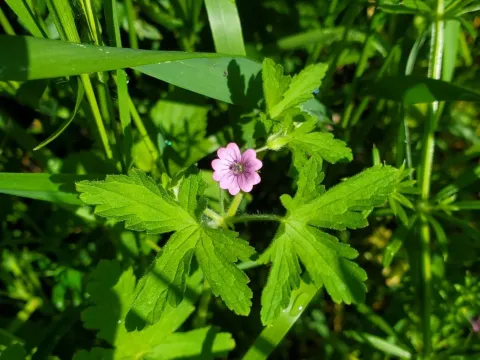
Geranium divaricatum
Geranium divaricatum
Geranium divaricatum is an annual herbaceous plant belonging to the Geraniaceae family. In agricultural settings, it is primarily identified as a weed that colonizes fields and uncultivated areas through prolific self-seeding.
What the section contains
Geranium divaricatum
Propagation is strictly through seeds. Germination typically occurs during the early spring months when soil temperatures reach the threshold necessary for metabolic activity, though autumn germination can occur under favorable moisture conditions.
Seeds of this species exhibit high viability and can remain dormant in the soil seed bank for several years. The natural dispersal of seeds occurs upon maturity, providing a continuous supply of potential seedlings for subsequent growing seasons.
Seedlings emerge in varying stages depending on soil moisture levels and light exposure. The ability to germinate at shallow depths makes this plant highly effective at colonizing disturbed agricultural soils shortly after tillage operations.
The life cycle is characterized by rapid vegetative growth, which allows the plant to establish dominance over surrounding vegetation and compete for nutrients during the early stages of the agricultural crop's development.
The plant thrives in moderately moist, nutrient-rich soils, preferring loamy or sandy substrates. It shows significant adaptability to light intensity, successfully growing in both full sunlight and partial shade environments.
An optimal temperature range for active growth is between 15 and 22 degrees Celsius. While it is relatively hardy, the plant is sensitive to prolonged waterlogging or poor drainage, which can inhibit root health and overall biomass production.
Soil pH preference ranges from slightly acidic to neutral. High levels of soil acidity may suppress development, making regular soil testing an important part of managing the prevalence of this species in farmland.
Effective management requires rigorous crop rotation and timely inter-row cultivation. These practices minimize the opportunity for Geranium divaricatum to establish a foothold during the critical stages of the primary crop's development.
Balanced fertilization is crucial; excessive nitrogen application can lead to vigorous vegetative growth, allowing the plant to suppress desirable crops and increase the competitive pressure within the field.
Geranium divaricatum can serve as a host for various pathogens, including fungal diseases like rust and powdery mildew. Its presence in or near fields increases the risk of these diseases spreading to vulnerable agricultural crops.
Pests such as aphids and spider mites frequently utilize this plant as a refuge and food source. Managing these populations on weeds is essential to prevent migration onto primary crops throughout the growing season.
Seed-feeding insects can reduce the overall fecundity of the plant, but given its high seed production, this is rarely sufficient to control the population density without additional human intervention.
Chemical control strategies are most effective when herbicides are applied during the rosette stage. At this phase, the plant has a higher leaf area for herbicide absorption, leading to more effective mortality rates.
Deep plowing or mechanical removal remains a standard practice to bury seeds or uproot established plants, significantly reducing the seed bank and preventing the infestation of subsequent seasonal crops.