
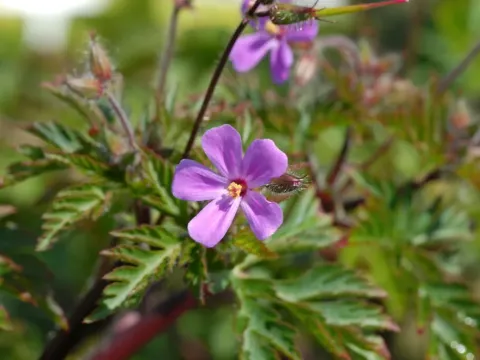
Geranium rubescens
Geranium rubescens
Geranium rubescens is a perennial plant belonging to the Geraniaceae family, valued for its ornamental properties and adaptability.
What the section contains
Geranium rubescens
Seeds are typically sown in autumn, allowing for a cold stratification period that significantly improves germination rates during the spring.
For indoor propagation, seeds should be placed in sterile, well-draining potting mix at a depth of approximately 0.5 centimeters.
Optimal temperatures for initial growth range between 18 and 22 degrees Celsius, ensuring that the seedlings develop strong root systems.
Transplanting into the garden bed should occur only after the risk of frost has passed to prevent stress to the young developing plants.
This species thrives in locations with full sun to partial shade, where the soil is rich in organic matter and maintains consistent moisture.
Good drainage is the most critical requirement, as Geranium rubescens does not tolerate waterlogged conditions which may lead to root rot.
The ideal soil pH for healthy growth is slightly acidic to neutral, allowing for optimal nutrient uptake throughout the growing season.
Regular applications of organic compost can supplement the soil, providing the necessary minerals to sustain vigorous flowering periods.
Establishing adequate space between plants is vital to reduce humidity levels and promote healthy airflow throughout the foliage canopy.
Common issues affecting this culture include powdery mildew and fungal leaf spots, which thrive in stagnant, humid environments.
Preventative cultural practices such as avoiding overhead irrigation are effective ways to mitigate the risk of fungal outbreaks.
Pests like aphids and spider mites may occasionally infest the plants, particularly during periods of extreme heat or dryness.
- Regular inspection of the undersides of leaves
- Early detection of signs of feeding damage
- Application of insecticidal soap if required
Maintaining a clean garden environment by removing debris helps break the lifecycle of many common garden pests and diseases.
The collection of seeds requires careful timing, as the capsules open readily when mature to disperse their contents naturally.
Deadheading faded blooms serves both an aesthetic purpose and a practical one by encouraging the plant to produce secondary flower flushes.
Root division is a common method for propagating established clumps, which is best performed during the plant's dormant phase.
For ornamental or dried arrangements, stems should be cut early in the day when the plant's turgor pressure is at its highest.
Preparing the plant for winter involves clearing away dead foliage once the first hard frosts have signaled the end of the growth cycle.