
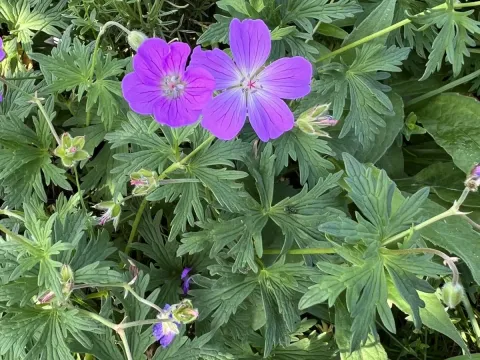
Geranium caeruleatum
Geranium caeruleatum
Geranium caeruleatum is a perennial herbaceous plant belonging to the Geraniaceae family. Known for its aesthetic appeal and structural beauty, this species is widely cultivated in various garden environments and landscapes.
What the section contains
Geranium caeruleatum
The plant thrives best in well-drained, fertile soil that maintains a moderate level of moisture. While it is adaptable to different environmental conditions, it performs best in locations that offer sufficient sunlight or light shade, ensuring the plant receives enough light to promote vigorous growth.
Consistent watering practices are essential for the health of Geranium caeruleatum. While it can withstand short periods of dryness, keeping the soil evenly moist—without causing waterlogging—is the key to preventing stress and ensuring optimal blooming during the summer season.
General maintenance involves periodic mulching and the removal of weeds to minimize competition for nutrients. Regular application of a balanced fertilizer in the early spring can significantly boost the overall vigor of the plant and enhance the production of its characteristic flowers.
The climate requirements for this species are moderate, as it exhibits excellent winter hardiness. It is well-suited for temperate regions where it can survive seasonal temperature fluctuations while remaining dormant during the winter months, only to return with new growth in the spring.
Common phytopathological threats to Geranium caeruleatum include fungal infections such as powdery mildew. These diseases are particularly prevalent in damp, stagnant air environments, necessitating proper plant spacing to ensure adequate air circulation.
Pests such as aphids and spider mites can occasionally affect the foliage, particularly when the plant is under drought stress. Implementing integrated pest management strategies, such as biological control or localized application of insecticides, is recommended to mitigate damage.