
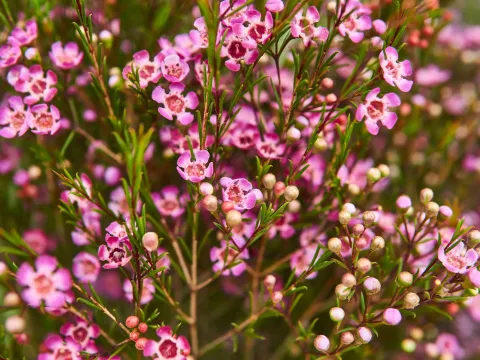
Geraldton wax
Chamaelaucium uncinatum
Geraldton wax (Chamaelaucium uncinatum) is a woody shrub belonging to the Myrtaceae family, native to the sandy landscapes of Western Australia. It is highly valued globally in the floral industry for its delicate blooms.
What the section contains
Geraldton wax
The plant thrives in Mediterranean-style climates, requiring full sun exposure to flourish. It is sensitive to frost and extreme cold, necessitating protected cultivation in regions with harsh winters.
Soil structure is critical; the plant requires exceptionally well-draining, sandy-loam soils. It is highly intolerant of waterlogged conditions, which lead to rapid root decay.
Watering management should be precise. While young plants need regular irrigation to establish root systems, mature plants are relatively drought-tolerant but benefit from consistent moisture during active growth.
Fertilization must be managed carefully, using low-phosphorus fertilizers, as the species is adapted to phosphorus-poor native soils and can be harmed by conventional high-nutrient commercial fertilizers.
The most significant pathological threat to Geraldton wax is Phytophthora root rot, which typically stems from poor soil drainage or excessive irrigation practices.
Pests such as spider mites, scale insects, and aphids frequently target the foliage, particularly in greenhouse conditions where ventilation might be inadequate.
Management of these threats involves integrated pest management strategies, including the use of targeted biological controls and localized pesticide applications.
Maintaining a clean growing environment by removing debris and ensuring consistent airflow helps minimize the spread of airborne fungal pathogens.
Regular inspection of the root collar and lower stems is essential for early detection of fungal issues before they become terminal for the plant.
Harvesting is performed by cutting flowering stems when approximately 50-70% of the flowers have opened, ensuring the product has enough stamina for distribution.
Harvesting should ideally be done during early morning hours to ensure the stems are fully hydrated, which directly correlates with the final vase life.
Upon harvest, stems should be immediately placed in clean water containers to prevent air embolism in the vascular tissues.
Post-harvest handling includes grading the stems by length and quality, followed by storage in cold rooms maintained at temperatures between 2°C and 5°C.
Pruning the plants after the harvest season is crucial for canopy management, promoting lateral growth and increasing yield for the following year.