
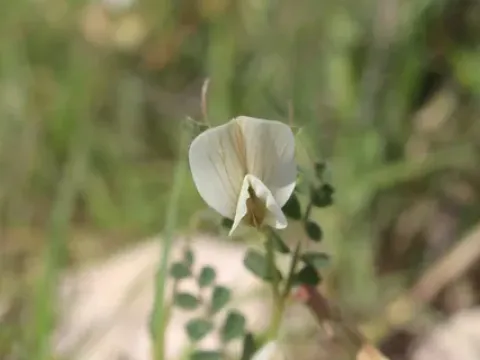
Vicia sericocarpa
Vicia sericocarpa
Vicia sericocarpa is a member of the Fabaceae family, commonly known for its role as a forage legume in specific regional agricultural systems.
What the section contains
Vicia sericocarpa
Early spring planting is typically recommended to allow the seeds to capitalize on soil moisture, ensuring a robust establishment of the root system.
The planting depth usually varies from 3 to 5 centimeters, depending on the soil structure, ensuring that the seeds have sufficient contact with the earth to initiate germination.
It can be sown as a monoculture or in mixtures with cereals, such as oats or barley, which helps support the plants and prevents lodging during the growing season.
Rolling the soil after sowing is a highly recommended practice that optimizes seed-to-soil contact, leading to more uniform and vigorous seedling emergence.
This crop thrives in temperate climates with moderate rainfall, showing a particular preference for well-drained, fertile soils with a neutral or slightly alkaline pH.
While Vicia sericocarpa possesses some level of drought tolerance, consistent moisture during the flowering and pod-filling stages is essential to maximize overall yield.
Adequate sunlight is critical for its development; therefore, farmers should avoid planting in areas prone to shading by taller vegetation or trees.
Soil fertility management, particularly the application of phosphorus and potassium, can significantly boost nitrogen fixation, which is crucial for the crop's development.
Proper field drainage is vital, as the crop does not perform well in waterlogged conditions, which can lead to root rot and other physiological stressors.
The primary use of Vicia sericocarpa is as a high-quality forage crop, providing a significant protein source for various types of livestock.
Maximum green mass production is typically achieved during the flowering phase, as this is when the nutritional profile of the plant is at its most favorable.
When harvested for hay, the crop provides a nutrient-dense feed that supports animal growth and health during periods when pasture is limited.
Seed yield varies depending on environmental conditions and the effectiveness of pollination, which is influenced by local insect activity during the blooming period.
Good agricultural practices, including timely harvest, ensure that the potential yield of both biomass and seeds is effectively captured for farm use.
Common fungal diseases, such as Ascochyta blight and rust, pose a significant threat to Vicia sericocarpa, especially in humid and poorly ventilated conditions.
Insect pests, including root-nodule weevils and certain beetle species, can damage the foliage and seeds, necessitating careful field monitoring during the season.
A well-planned crop rotation strategy is the most effective defense against the buildup of species-specific soil pathogens that target legumes.
Using certified, pathogen-free seeds and applying appropriate protective treatments can drastically reduce the risk of early-season disease outbreaks.
Integrated pest management, combining biological and selective chemical controls, helps maintain the health of the crop while minimizing environmental impact.
Harvesting for green fodder is optimal at the mid-flowering stage, balancing biomass quantity with the nutritional quality of the plant tissues.
Modern hay-making equipment, such as disc mowers with conditioning capabilities, allows for efficient drying and preservation of the plant's nutrient-rich leaves.
For seed production, harvesting begins when the pods show characteristic color changes, requiring careful timing to prevent shattering and loss of seeds in the field.
Post-harvest handling is critical, requiring proper drying and storage to maintain seed viability and prevent fungal contamination during storage.
Adjusting harvesting machinery, particularly the threshing drum speed and concave clearance, is essential to minimize seed damage and improve final product quality.