
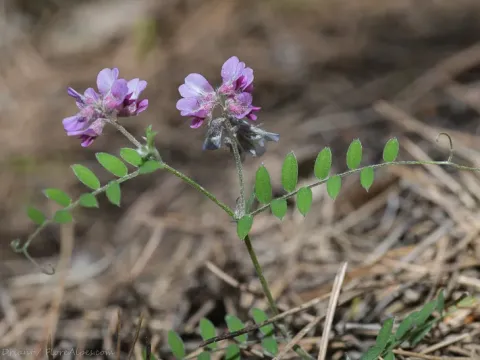
Vicia vicioides
Vicia vicioides
Vicia vicioides is a species belonging to the Fabaceae family, recognized for its role in agricultural systems as a high-protein crop for livestock feed and green manure.
What the section contains
Vicia vicioides
The sowing season typically starts in early spring, once the soil temperature reaches a level conducive to seed germination, usually around 5-8 degrees Celsius.
Farmers are advised to sow the seeds at a depth of 3 to 5 cm, ensuring they are placed in firm contact with moist soil to encourage uniform seedling emergence.
The seeding rate must be precisely calibrated to ensure an optimal plant stand, which aids in weed suppression and maximizes the biomass production per hectare.
Early sowing is beneficial as it allows the plant to establish its root system before the onset of potential summer drought conditions, ensuring better resilience.
The crop performs best in well-drained, fertile loamy soils with a neutral pH level, as it is sensitive to waterlogging and highly acidic soil conditions.
Adequate moisture is essential during the vegetative stages, particularly during the flowering phase, to ensure optimal yields of both green mass and seeds.
As a light-loving plant, it requires full sun exposure to maintain vigorous growth, meaning that over-seeding or shading by adjacent structures should be avoided.
Fertilization with phosphorus and potassium is recommended to support nitrogen-fixing activity and root development, which are critical for yield success.
Crop rotation remains a fundamental requirement, where it should be grown after cereals or potatoes to reduce the buildup of soil-borne pathogens and pests.
Common fungal diseases such as powdery mildew and ascochyta blight represent significant threats, especially in humid and poorly ventilated field conditions.
Insect pests, particularly nodule weevils, can cause substantial damage to young seedlings, while aphids may infest mature plants during warmer weather.
Early monitoring of pest populations is essential to prevent significant crop loss and to determine if control measures are necessary for economic viability.
Cultural practices, such as maintaining optimal planting density, can help create an environment that is less favorable to the rapid spread of diseases.
Integrated pest management strategies should be employed to combine chemical control with biological and agronomic practices for long-term field health.