
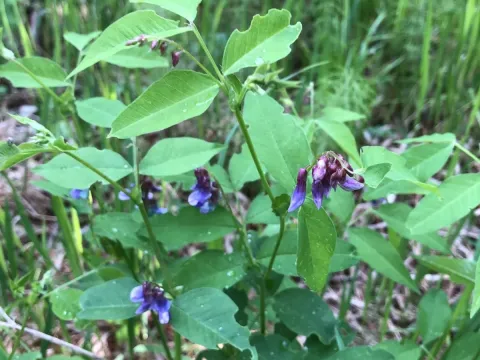
Vicia ramuliflora
Vicia ramuliflora
Vicia ramuliflora is a perennial legume species that thrives when planted in the early spring, as soon as the soil is workable and free from deep frost.
What the section contains
Vicia ramuliflora
The optimal seeding depth is generally between 2 and 3 centimeters, which provides sufficient soil contact and moisture for successful germination of the seeds.
Row spacing should be calculated based on whether the crop is grown in pure stands or as part of a forage mixture, typically requiring enough space for development.
In regions with mild autumns, late summer sowing is also possible, allowing the plants to establish a strong root system before the onset of winter dormancy.
Ensuring high-quality seed selection is essential to promote vigorous early growth and increase the chances of the crop successfully suppressing surrounding weeds.
This crop prefers well-drained loamy or sandy-loam soils that are rich in nutrients and maintain a near-neutral pH for optimal growth and nitrogen fixation.
Vicia ramuliflora requires a sunny location and performs poorly in heavily shaded areas, which can lead to elongated, weak stems and reduced overall biomass.
The species is known for its moderate drought tolerance once established, but it lacks endurance against prolonged waterlogging, which often leads to root rot.
It thrives in temperate climatic zones where temperatures range from 18 to 22 degrees Celsius, showing good resilience during the growing season.
Proper field maintenance includes monitoring soil moisture and ensuring that drainage systems are functional to prevent the accumulation of excess water during rainfall.
The biomass yield of Vicia ramuliflora is highly dependent on effective soil management, including the balanced application of phosphorus and potassium fertilizers.
As a nitrogen-fixing plant, it contributes to soil fertility, which enhances the overall productivity of the field and reduces the need for synthetic nitrogen inputs.
Multiple harvests are possible within a single growing season if the timing of the initial cut is managed effectively to allow for rapid vegetative regrowth.
The protein content of the forage is relatively high, making it a valuable feed source for livestock, provided it is harvested at the peak of its nutritional cycle.
Optimizing the plant density per hectare significantly impacts the final harvest volume, balancing the trade-off between individual plant growth and total biomass.
Common pests such as pea weevils can damage the leaves and root system, potentially causing reduced vigor and impacting the plant's ability to fix nitrogen efficiently.
Fungal diseases like powdery mildew are common in humid conditions, manifesting as a fine white coating on the foliage and reducing the crop's photosynthetic capacity.
Rust fungi represent another significant threat, capable of spreading rapidly through a field and leading to premature defoliation if not managed early.
Integrated pest management strategies are recommended, focusing on crop rotation and the use of resistant varieties to mitigate the risk of disease outbreaks.
Regular inspection of the field is crucial during the active growth phase to detect early signs of infestation and prevent extensive economic losses to the forage yield.
Harvesting for forage should ideally occur at the onset of the flowering stage, ensuring the plant retains the highest possible levels of proteins and essential nutrients.
For hay production, the material must be dried properly to prevent mold development, ensuring a moisture content level that is safe for long-term storage in barns.
Seed harvest requires careful timing to avoid shattering, as the pods can open if left on the field for too long after achieving physiological maturity.
Modern harvesting equipment should be adjusted to minimize shattering losses and avoid damaging the crowns of the perennial plants, which helps in future regrowth.
Post-harvest conditioning and cleaning are vital for preserving seed quality, ensuring that the moisture content is reduced to levels suitable for long-term storage.