
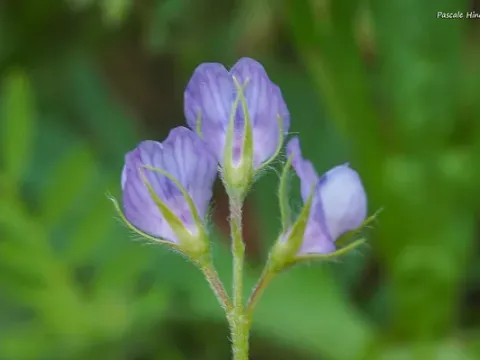
Vicia orientalis
Vicia orientalis
Vicia orientalis is a perennial plant, making the timing of sowing critical for the establishment of a robust root system during the first year. The optimal sowing time is early spring, as soon as the soil reaches physical maturity and warms up.
What the section contains
Vicia orientalis
Winter sowing is also feasible in regions with mild climates, allowing the seeds to undergo natural stratification. It is essential to ensure good contact between seeds and moist soil to achieve uniform germination.
The seeding rate depends on the sowing method and the intended use of the crop. For solid seeding, the rate is increased, while for row cropping, it is reduced to provide the optimal area for each plant to thrive.
Scarification of seeds is recommended before sowing, as the seed coat can be hard, which might delay emergence. This process improves germination energy and ensures field uniformity.
The planting depth typically ranges from 2 to 4 cm depending on soil texture. In light sandy soils, seeds are sown deeper, while in heavy clay soils, they are sown closer to the surface.
Vicia orientalis is a perennial legume known for its excellent winter hardiness and ability to thrive in challenging climates. It prefers well-aerated soils and avoids areas prone to waterlogging or high groundwater tables.
The crop shows high plasticity regarding soil types, including loams, though it reaches its peak productivity on fertile chernozem soils. It responds well to the application of potassium and phosphorus fertilizers.
The plant features a well-developed root system, enabling it to efficiently extract moisture from deep soil layers. This makes the crop suitable for cultivation in regions with moderate atmospheric precipitation deficits.
Light exposure is vital for the photosynthetic activity of the oriental vetch. It does not tolerate heavy shading, which is why undersowing under high-density cover crops is generally not recommended.
The optimal pH level for this crop falls within the slightly acidic to neutral range. On highly acidic soils, preliminary liming is necessary to activate the nitrogen-fixing symbiotic bacteria.
The green mass yield of Vicia orientalis reaches high levels when utilizing intensive cultivation technologies. On average, one or two cuts can provide a significant volume of high-quality, protein-rich forage.
Seed productivity is highly dependent on weather conditions during flowering and grain filling. Uniform pod ripening allows for mechanical harvesting with minimal field losses.
While low doses of nitrogen fertilizer at the start of growth can boost initial biomass, the crop is capable of self-sufficient nitrogen levels due to its symbiotic relationship with rhizobia bacteria.
The productive lifespan of the stand is typically 5 to 7 years, after which the field requires renewal. High regrowth potential allows for grazing or an additional late-season harvest.
The quality of the yield is determined by the harvesting phase. Peak nutrient content and digestibility are achieved when the crop is cut at the budding to early flowering stage.
Key diseases affecting Vicia orientalis include fungal infections such as anthracnose and powdery mildew, which thrive in high-humidity conditions. Regular field monitoring is essential for early detection and control.
Pests such as pea leaf weevils can cause significant damage to seedlings during the early vegetative stage. They feed on leaf blades and roots, which can stunt the overall growth of the crop.
Aphids and various plant bugs may also damage the reproductive organs of the plant, potentially reducing seed yields. Integrated pest management using biological or chemical controls is advised when thresholds are exceeded.
Root rot diseases can occur if agronomic practices are neglected, especially in over-saturated or waterlogged soils. Crop rotation and avoiding monocultures are the primary methods for disease prevention.
- Maintain appropriate spatial isolation between crops.
- Use certified and treated planting material.
- Implement timely mechanical weed control.
Harvesting for hay should be conducted at the onset of flowering to achieve the best balance between biomass volume and nutritional quality. Rapid wilting is crucial to preserve high carotene levels.
When producing haylage, the process requires wilting the mass to 50-60% moisture content. This technique helps preserve the nutrient-rich leaves, which contain the majority of the plant's proteins.
Seed harvesting is performed when the majority of pods have turned brown and seeds have hardened. A two-stage harvesting process is usually preferred to minimize shattering losses.
Using combine harvesters with calibrated threshing mechanisms prevents seed damage. After threshing, immediate cleaning and drying are necessary to prevent the bulk from heating.
Post-harvest management involves light discing or shallow plowing, which promotes better regrowth and preserves nutrient reserves in the root system for the upcoming season.