
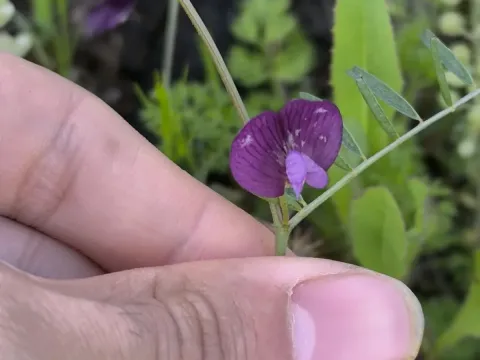
Vicia peregrina
Vicia peregrina
Vicia peregrina is an annual herbaceous legume known for its robust adaptability and role in sustainable agricultural systems as a soil-improving crop.
What the section contains
Vicia peregrina
Sowing should be timed according to local climate conditions, typically occurring in autumn for winter-hardy regions or early spring in cooler climates.
The seeds should be placed at a depth of approximately 3 to 5 centimeters in well-prepared, friable soil to ensure optimal germination and seedling emergence.
Row spacing should be maintained between 15 and 20 centimeters to allow for adequate airflow and to facilitate effective weed management practices.
It is recommended to use inoculated seeds to ensure effective nodulation and symbiotic nitrogen fixation, which significantly boosts crop productivity.
This species thrives in Mediterranean-type climates, exhibiting superior drought tolerance compared to other species within the Vicia genus.
Soil requirements are relatively flexible, though the plant prefers well-drained, calcareous soils with a neutral or slightly alkaline pH balance.
Excessive moisture in the soil profile should be avoided, as it can lead to root degradation and negatively impact the symbiotic bacterial colonies.
Exposure to full sunlight is essential for healthy development, as the plant requires significant solar energy to sustain its vigorous vegetative growth.
Maintaining soil fertility through moderate applications of phosphorus and potassium helps ensure robust plant architecture and resistance to environmental stress.
The yield potential of Vicia peregrina is primarily linked to the availability of moisture during the peak vegetative phase and the length of the growing season.
When grown for forage, the plant produces high-quality biomass that is rich in proteins and suitable for livestock consumption in various forms.
As a green manure crop, the biomass accumulation depends heavily on the timing of termination, with maximum nitrogen accumulation occurring near the flowering stage.
Proper management of the cropping cycle allows farmers to maximize both the nitrogen contribution to the soil and the overall forage output of the field.
Strategic harvesting or incorporation into the soil at the early bloom stage ensures the best balance between nutrient concentration and ease of decomposition.
Common phytosanitary issues include fungal infections like root rot, which typically manifest in poorly drained or overly compacted soil conditions.
Insect pests, specifically aphids and certain species of weevils, can cause significant damage to the foliage and buds, potentially reducing total seed yield.
Integrated Pest Management (IPM) strategies, including crop rotation and the use of resistant varieties, are highly recommended to control these threats.
Winter survival can be impacted by severe frosts if the plant has not achieved sufficient development before the onset of extreme cold temperatures.
Regular field scouting is essential to identify early signs of infestation or disease, allowing for timely intervention and crop preservation.