
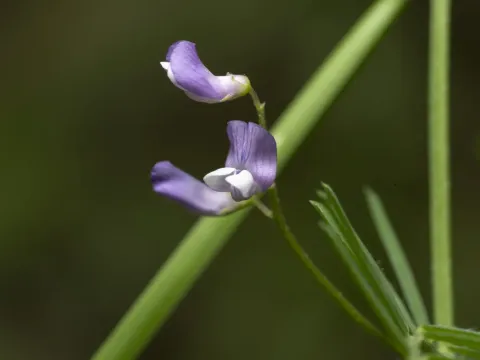
Palestine vetch
Vicia palaestina
Palestine vetch (Vicia palaestina) is a member of the Fabaceae family. As an annual herbaceous plant, it is native to the Mediterranean basin and the Middle East, where it typically colonizes rocky slopes and shrublands. The species is highly adapted to arid environments, exhibiting remarkable resilience in semi-desert ecosystems.
What the section contains
Palestine vetch
The botanical structure consists of delicate, climbing stems equipped with tendrils. These specialized organs allow the plant to cling to vegetation or agricultural support structures, ensuring optimal exposure to sunlight. The leaves are compound, and the flowers typically appear in loose clusters, reflecting the characteristic morphology of the Vicia genus.
Regarding soil requirements, the culture prefers well-drained, calcareous substrates. It thrives in soils with neutral to slightly alkaline pH levels, typical of its native geography. A high level of irradiance is crucial for the metabolic processes of the plant, as excessive shading tends to inhibit both biomass production and flowering cycles.
Agricultural management requires careful seedbed preparation to facilitate root penetration. The species establishes a symbiotic relationship with nitrogen-fixing bacteria, which enhances soil fertility without the need for intensive synthetic fertilizers. Proper moisture management during the early growth stages is essential, even though the species is drought-tolerant once established.
In farming practice, the primary use of Palestine vetch is as a high-protein forage source. It provides nutritious green matter that can be harvested as hay or grazed by livestock. Additionally, it is increasingly valued as a cover crop, as its deep root system and nitrogen-fixing capabilities help improve soil structure and overall fertility.
Diseases such as rust and anthracnose are the primary phytopathological concerns for this crop. These fungal infections are often triggered by high humidity levels or poor air circulation, which can compromise the health of the foliage and significantly reduce yield.
Common insect pests include leaf weevils and aphids, which feed on tender plant tissues. To mitigate these risks, farmers should focus on maintaining adequate spacing during sowing and conducting regular crop scouting to intervene before damage reaches critical levels.