
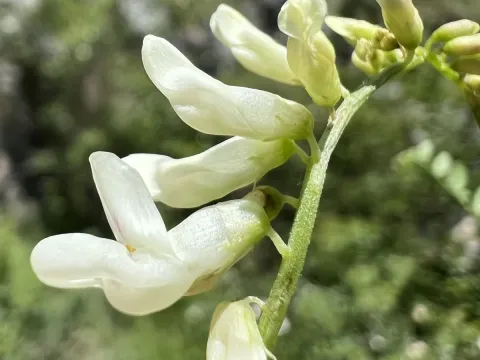
Pale-yellow vetch
Vicia ochroleuca
Pale-yellow vetch (Vicia ochroleuca) is a perennial leguminous plant belonging to the Fabaceae family. It is recognized for its role in natural phytocenoses and its potential as a component in cultivated meadows.
What the section contains
Pale-yellow vetch
The optimal sowing time depends on local climatic zones, but early spring is generally preferred. This allows the seeds to benefit from spring moisture, which is essential for uniform germination and early establishment.
Winter sowing can also be practiced, as the seeds undergo natural stratification, which often results in more robust growth in the following season. A sowing depth of 3–5 cm is ideal, depending on soil texture.
In fodder production, this species is frequently mixed with grasses like orchard grass or brome. Such mixtures increase the overall resilience of the pasture and provide a balanced nutritional profile for livestock.
Seeding rates should be adjusted based on seed viability and the intended use. Standard row planting with 15 cm spacing ensures that each plant receives sufficient resources for healthy development.
This crop is moderately demanding in terms of climate, showing good adaptability in forest-steppe zones. It demonstrates resilience to variable weather patterns, provided that moisture levels remain consistent.
It performs best on fertile loamy or sandy loam soils with a neutral pH. The species is sensitive to waterlogged conditions and highly acidic soils, which can severely inhibit root development and nitrogen fixation.
The plant features a well-developed taproot system, which helps it access nutrients in deeper soil layers. Through symbiotic relationships with nitrogen-fixing bacteria, it effectively enriches the soil with nitrogen.
Sunlight exposure is a significant factor for successful growth. While it can survive in partial shade, intense growth and high biomass production are only achieved in sunny conditions.
Temperatures between 18–22 degrees Celsius are optimal for its development. Although it exhibits some drought tolerance, regular rainfall is necessary to produce a high-quality forage harvest.
The primary agricultural use of pale-yellow vetch is in the fodder sector. It serves as an excellent source of protein and essential minerals, making it a highly valued component in livestock diets.
Biomass yield is highly dependent on agricultural practices, particularly the application of phosphorus and potassium fertilizers. With proper management, it can provide multiple cuts during the growing season.
The nutritional profile of this legume makes it ideal for dairy cattle feeding, as it contains a rich array of amino acids. It can be processed into hay, silage, or fed directly as green forage.
Besides its fodder value, the species acts as a pollinator-friendly plant, supporting biodiversity in agricultural landscapes. This contributes to a healthier overall ecosystem around the fields.
To ensure high nutritional quality, it is essential to harvest at the right time. Maximum nutrient concentration occurs during the early flowering phase before the stems become overly fibrous.
Common diseases affecting this crop include Ascochyta blight and powdery mildew. These fungal pathogens are particularly aggressive in high-humidity conditions and dense plantings, necessitating careful field monitoring.
Pests such as pea aphids and various weevils can threaten the crop. Integrated pest management, including both biological and chemical controls, is required to maintain a healthy stand.
Crop rotation is the most effective preventative measure against soil-borne pathogens. Reintroducing legumes to the same field too frequently should be avoided to prevent the buildup of specific diseases.
Treating seeds with fungicides before planting reduces the risk of early-stage infections. Maintaining good field hygiene and controlling weeds are also vital to keeping the crop vigorous.
Healthy, well-nourished plants are naturally more resistant to pests and diseases. Providing an optimal environment for growth is the foundation of any successful disease prevention strategy.
Harvesting for green mass should take place at the budding or early flowering stage. This is when the plant offers the best balance of vitamins, minerals, and digestible proteins for livestock.
For seed production, harvesting begins once the pods have matured. Timing is critical to prevent pod shattering and minimize yield losses caused by delayed harvesting.
When producing hay, careful drying is required to protect the delicate leaves, which hold the highest nutrient content. Proper drying prevents mold growth and ensures the quality of stored feed.
A mowing height of 5–7 cm is recommended. This allows the plant to regenerate effectively, which is essential for ensuring productive regrowth for subsequent cuts during the season.
Storage conditions must be dry and well-ventilated to maintain forage quality throughout the winter. Proper storage prevents spoilage and preserves the nutritional integrity of the harvested material.