
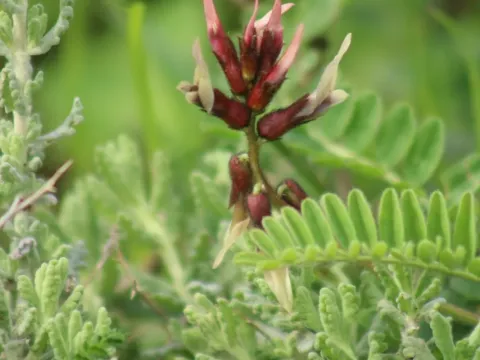
Palestinian milkvetch
Astragalus palaestinus
Palestinian milkvetch (Astragalus palaestinus) belongs to the Fabaceae family. This perennial herb is native to arid and semi-arid regions of the Middle East, demonstrating significant biological resilience.
What the section contains
Palestinian milkvetch
The plant thrives in well-drained, sandy-loam soils with a neutral to alkaline pH. It is particularly well-adapted to environments where water availability is periodic rather than constant throughout the growing season.
As a legume, it contributes to soil fertility through atmospheric nitrogen fixation. This characteristic makes it an excellent candidate for crop rotation systems aiming to naturally improve soil health.
Regarding climate, it requires high levels of solar radiation and is highly tolerant to heat. The plant is notably sensitive to root-zone saturation, making soil permeability a priority for its successful cultivation.
Effective stand establishment relies on proper site selection where internal drainage is excellent, preventing the risks of root decay that often occur in heavier soil types.
Root rots are the most significant threats to Astragalus palaestinus. These fungal infections are typically associated with excessive soil moisture or poor drainage in the field.
Insect pests such as seed beetles can infest developing pods, significantly reducing the viability and yield of the harvest intended for future seeding cycles.
Powdery mildew may occur in stagnant, humid environments. Maintaining adequate spacing between rows is essential to facilitate air movement and minimize the risk of fungal spread within the canopy.
Weed control during the early stages of establishment is critical, as young plants have a slow growth rate and are easily suppressed by faster-growing invasive weed species.
Implementing a strict irrigation schedule and monitoring for early signs of disease are the primary strategies to maintain the health and long-term productivity of the crop.