
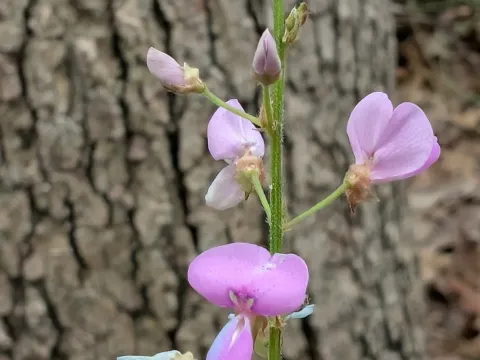
Panicled Tick-trefoil
Desmodium paniculatum
Panicled Tick-trefoil (Desmodium paniculatum) is a perennial herbaceous legume belonging to the Fabaceae family. Native to North America, this plant is valued in agriculture for its ability to fix atmospheric nitrogen and improve soil fertility in diverse ecosystems.
What the section contains
Panicled Tick-trefoil
Sowing should be carried out in the spring once the soil temperatures have reached at least 15 degrees Celsius. The seeds often possess a hard seed coat, which may require scarification to improve germination rates and ensure a uniform plant stand in the field.
The recommended planting method involves drilling in rows with spacing between 30 and 50 centimeters. This arrangement facilitates efficient weeding and optimal aeration, which are crucial for the development of young plants during their establishment phase.
Being a deep-rooted perennial, the plant develops a sturdy root system during its first year of growth. While it may appear to grow slowly initially, the investment in roots ensures that the plant remains resilient and productive in subsequent years.
Due to its nitrogen-fixing capabilities, this culture is an excellent candidate for inclusion in sustainable crop rotation programs. It significantly reduces the need for synthetic nitrogen fertilizers, making it an economically and ecologically viable option.
This legume thrives in well-drained soils, ranging from sandy loams to heavier clays, provided that drainage is adequate. It is particularly sensitive to waterlogging, which can cause root rot and significantly decrease the plant's long-term survival.
Panicled Tick-trefoil is a sun-loving species that performs best in open, full-sun conditions. While it exhibits some tolerance to partial shade, full exposure to sunlight maximizes biomass production and promotes a more vigorous flowering cycle.
The plant demonstrates remarkable drought resistance once established, thanks to its extensive taproot system. This trait allows it to withstand dry periods that would typically affect shallower-rooted forage crops, maintaining its vitality throughout the summer.
In terms of temperature, it is well-suited for temperate climates and displays sufficient cold hardiness during the winter months. The root system remains dormant but viable underground, ready to resume growth as soon as soil temperatures rise in the spring.
Maintenance involves routine weeding, particularly in the first two seasons to prevent competitive species from overtaking the plot. Minimal intervention is usually required after the plants have fully established their canopy, as they become quite effective at suppressing weeds.
Fungal leaf spot diseases represent the primary threat to the crop, especially in areas with high humidity or poor air circulation. Implementing wide row spacing and ensuring proper soil drainage are effective preventative measures against these pathogens.
Insect pests, such as various weevils and aphids, can cause localized damage to foliage and developing reproductive structures. Integrated pest management strategies, utilizing beneficial predatory insects, are recommended to maintain ecological balance in the field.
Competition from perennial grasses can jeopardize the establishment of the crop. Proactive site preparation, including thorough tillage and removal of existing turf, is essential to give the Desmodium seedlings a strong start without intense competition.
To avoid the buildup of soil-borne diseases, it is strictly advised to follow a crop rotation plan. Returning legumes to the same soil too frequently increases the risk of specific infestations and can deplete soil nutrients in an imbalanced way.
Seed predation by insects can be an issue during the final stages of pod maturation. Farmers should closely monitor the crop for signs of infestation and prioritize timely harvesting to reduce potential losses in the seed yield.
For high-quality forage, the harvest should take place at the onset of the flowering phase. Harvesting at this stage ensures the best balance between protein content, biomass volume, and palatability, which is vital for livestock performance.
Seed harvesting should be performed when the pods turn deep brown and appear dry. Due to the tendency of some legumes to shatter, timing is critical; harvesting should ideally be done in the morning to prevent pods from opening due to heat and mechanical impact.
Post-harvest processing requires immediate drying of the seeds to moisture levels below 14 percent to prevent microbial growth and maintain long-term seed viability. Proper storage in cool, dry conditions is necessary for sustaining germination quality.
When maintained as a honey plant, harvesting should be postponed until the end of the flowering season. This allows pollinators to maximize their foraging activity, providing a dual benefit of honey production and high-quality soil biomass.
Leftover green residue can be incorporated into the soil as a green manure. This practice effectively recycles nutrients trapped in the plant biomass back into the soil, significantly enhancing soil structure and fertility for subsequent seasons.