
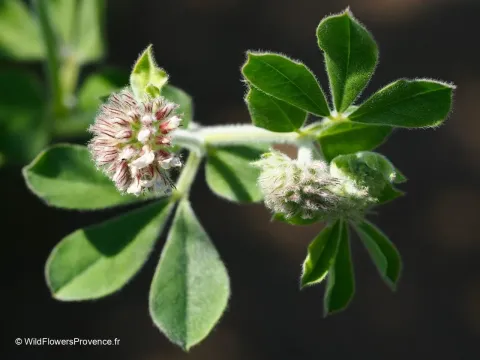
Pale clover
Trifolium pallidum
Pale clover is an annual legume that thrives when sown in early spring. The optimal time for planting is as soon as the soil reaches a temperature of 6–8 degrees Celsius, ensuring favorable conditions for germination.
What the section contains
Pale clover
Seeds should be planted at a shallow depth of 1–2 centimeters. This depth promotes quick emergence while protecting the small seeds from drying out in the upper soil layer.
Standard row planting is the most common method for establishing a crop. Maintaining a row spacing of about 15 centimeters allows for proper nutrient uptake and adequate space for the plants to develop their root systems.
In regions with mild winters, autumn sowing can be a viable strategy. This allows the clover to establish itself early, taking full advantage of winter moisture and providing an early start to the growth season.
Seed rate is a critical factor for successful establishment. Farmers should adjust the density based on whether the primary goal is seed production, forage quality, or soil improvement via cover cropping.
This species is highly adaptable to various soil types, preferring well-drained loamy soils. It performs best in neutral to slightly acidic environments and can handle a range of fertility levels.
Sunlight is essential for Trifolium pallidum. It grows most vigorously in open, sunny fields, where solar energy promotes high chlorophyll production and subsequent biomass accumulation.
Water requirements are moderate. While the plant can tolerate short periods of drought, consistent moisture during the active growth phase is necessary for maximizing the yield of green matter.
Adequate levels of phosphorus and potassium are recommended to boost crop health and nitrogen-fixing capabilities. As a legume, it performs well without significant nitrogen supplementation, as it naturally enriches the soil.
Field maintenance includes managing weeds, especially in the early stages. Once the clover has established a closed canopy, it becomes highly effective at suppressing competing weeds on its own.
The yield potential of pale clover depends largely on the soil moisture and the timing of the harvest. During the peak blooming phase, the plant reaches its maximum nutritional value, providing high-quality protein for livestock.
As a forage crop, it is valued for its digestibility and palatability. It is frequently used in hay production, offering a nutrient-dense supplement that supports the growth and health of farm animals.
Beyond animal nutrition, the crop contributes to soil structure improvement. Its root biomass and the nitrogen it fixes improve the overall physical and chemical properties of the field for future planting cycles.
Seed production is generally reliable if the growing conditions are favorable. Careful management during the flowering and seed-set stages can result in high-quality yields suitable for subsequent years.
By rotating pale clover in a farm program, growers can achieve consistent biomass production while simultaneously managing their soil fertility costs effectively.
Fungal diseases like powdery mildew and various leaf spot infections are the primary threats. These pathogens tend to thrive in humid, poorly ventilated conditions, highlighting the importance of field management.
Pests, particularly clover weevils, can target the plant's roots and foliage. Implementing a proper crop rotation cycle is the most effective way to prevent the buildup of these harmful populations in the soil.
Stagnant water and poor drainage can lead to root rot. To mitigate this risk, fields should be properly drained, and sowing density should be monitored to ensure sufficient airflow throughout the crop canopy.
Regular monitoring for early signs of infection allows for prompt intervention. In organic systems, preventative cultural practices such as timing and selection of resistant varieties are key to protection.
Preventing the arrival of invasive pests requires consistent scouting and rapid identification, ensuring that the field remains healthy throughout the entire development of the plants.
Harvesting for forage is best performed at the onset of flowering. This timing captures the ideal balance between biomass volume and the concentration of vital amino acids and proteins.
When producing hay, the crop should be cut and turned to ensure rapid drying. Reducing moisture content quickly is essential to prevent fermentation and the loss of essential nutritional components.
Seed harvesting should be synchronized with the browning of the seed heads. Careful timing is necessary to avoid seed shattering, which can significantly reduce the amount of recovered seed.
As a green manure, the plants are incorporated into the soil during the late budding stage. This ensures maximum nitrogen and organic matter return to the earth before the plants become too fibrous.
Machinery should be adjusted to achieve the proper cutting height, ensuring that neither the regrowth potential is damaged nor the harvest is contaminated with soil or debris.