
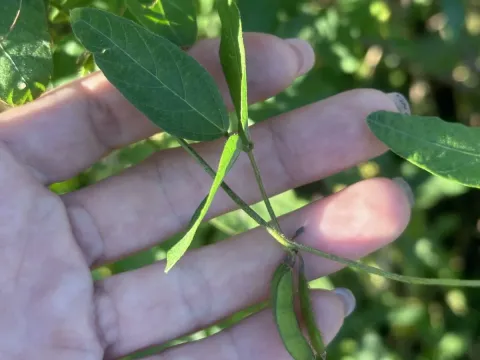
Wild soybean
Glycine soja
Wild soybean (Glycine soja) is a climbing annual plant belonging to the Fabaceae family. As the direct wild ancestor of the cultivated soybean (Glycine max), it represents an essential biological resource for global agricultural research and crop improvement programs.
What the section contains
Wild soybean
The plant is native to East Asia, including regions across China, Russia, Korea, and Japan. Its natural habitats typically include riverbanks, marshes, and meadows where the plant can utilize other vegetation as a support structure for its vigorous, vine-like growth.
Botanically, it is distinguished by slender, prostrate or climbing stems covered with fine hairs, trifoliate leaves, and small, dark seeds that are highly prone to shattering upon maturity. This shattering trait is a survival mechanism that ensures seed dispersal in the wild.
Climatic requirements are centered on a sufficiently long frost-free growing season and adequate soil moisture. It thrives in various soil types but demonstrates superior performance in well-aerated, fertile environments where nitrogen-fixing bacteria can effectively colonize the root system.
In terms of agricultural significance, wild soybean is not cultivated for large-scale production. Instead, its primary value lies in its extensive genetic diversity, providing breeders with crucial genes for traits like abiotic stress tolerance, disease resistance, and seed composition quality.
Wild soybean is susceptible to several pathogens, including bacterial blight and various fungal diseases. However, unlike elite commercial varieties, wild populations often possess robust innate resistance mechanisms that have evolved over millennia to combat local infections.
Insect pests, such as soybean aphids and pod borers, frequently target the plant. The species has developed defensive strategies, including the production of secondary metabolites, which serve to protect it from extensive damage during the critical reproductive development phases.
Weed competition is a significant threat during the seedling stage. As a shade-intolerant species, wild soybean requires direct sunlight for optimal growth; heavy canopy cover by invasive weeds can lead to stunted development and reduced reproductive success.
Human-induced environmental changes, such as habitat loss and industrial pollution, threaten the integrity of wild Glycine soja populations. Preserving these habitats is vital, as they serve as living gene banks that may contain solutions to future climate-related challenges.
Ongoing research aims to map the genome of wild soybean to better understand its defense pathways. By analyzing how this plant survives in harsh natural conditions, scientists can engineer stronger, more resilient varieties of cultivated soybeans for sustainable global farming.