
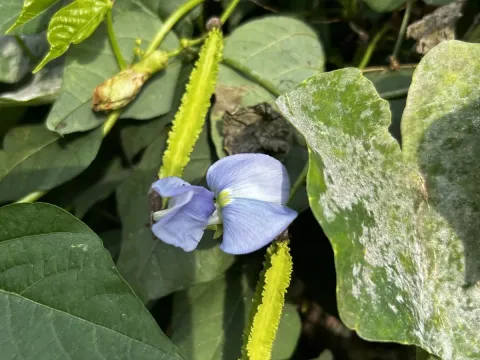
Winged bean
Psophocarpus
The winged bean is a strictly tropical crop that requires warm temperatures throughout the entire germination and development period to thrive effectively.
What the section contains

Winged bean
In its native tropical regions, planting is usually timed to coincide with the onset of the rainy season to ensure sufficient moisture for seed emergence.
For cultivation in greenhouses or temperate climates, seeds should be sown only when the soil temperature is consistently above 20 degrees Celsius.
Pre-soaking seeds in warm water for about 24 hours is standard practice to soften the seed coat and significantly improve the speed and uniformity of germination.
Seeds are typically placed at a depth of 2 to 3 centimeters, with spacing of 30 to 45 centimeters to provide enough room for the vigorous vining growth of the plant.
As a member of the Fabaceae family, the winged bean requires full sun exposure and a frost-free environment, ideally with temperatures ranging from 25 to 30 degrees Celsius.
The crop performs best in well-drained, fertile soil, though it is remarkably adaptable and can grow in various soil types provided there is no waterlogging.
Being a climbing plant, it is essential to install sturdy trellis systems or poles immediately after sowing to support the rapid development of the vines.
The plant is known for its ability to fix atmospheric nitrogen, which makes it an excellent candidate for improving soil fertility in intercropping systems.
Regular irrigation is vital during the flowering and pod formation stages to prevent flower drop and ensure consistent pod development throughout the harvest season.
The winged bean is often referred to as a "one-species supermarket" because almost every part of the plant can be consumed, offering high yields of edible material.
The immature green pods are the primary yield component, usually ready for harvest within two to three months after the initial sowing of seeds.
Leaves, flowers, and tender shoots also contribute to the total nutritional yield, being harvested throughout the vegetative growth period of the plant.
In addition to above-ground parts, the plant develops protein-rich tuberous roots, which provide a secondary food source after the pods have been harvested.
Commercial yields of pods can range widely, but under optimal management, producers can achieve significant harvests that sustain local food security.
Fungal diseases like anthracnose and powdery mildew represent the most significant threats, especially in areas characterized by high humidity and poor air circulation.
Insect pests, including aphids and whiteflies, are frequent visitors that can cause stunted growth and vector viral diseases throughout the crop area.
Root-knot nematodes can severely affect yield by damaging the root system, making proper crop rotation a fundamental management practice for all growers.
Excessive rainfall during the flowering period can hinder pollination and increase the incidence of pod rot, necessitating careful monitoring of weather conditions.
To mitigate these threats, integrated pest management including the use of resistant varieties and proper field hygiene is strongly recommended by agronomists.
Harvesting the pods requires careful timing; they should be picked when they are young, tender, and before the seeds inside become fully developed and fibrous.
The harvesting of leaves and flowers is done periodically, allowing the plant to continue producing new growth without compromising the main crop yield.
Tuberous roots are harvested at the end of the crop cycle, typically when the vines start to dry out and die back naturally in the field.
Proper post-harvest handling is necessary, as the fresh produce is highly perishable and should be kept in a cool environment to maintain quality.
For seed production, pods are left on the trellis until they are completely dry and turn brown, after which they are collected and threshed for storage.