
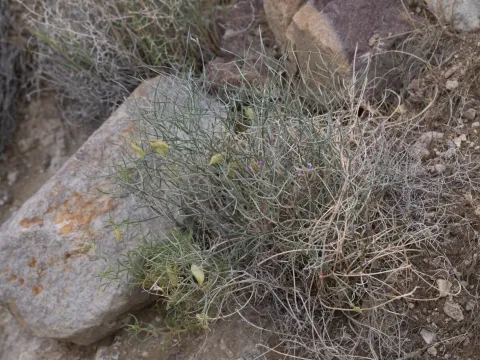
Wing-fruited milkvetch
Astragalus pterocarpus
Wing-fruited milkvetch (Astragalus pterocarpus) is a perennial leguminous crop recognized for its remarkable ability to thrive in arid and semi-arid environments. It serves as a vital resource for improving forage quality in regions with limited rainfall.
What the section contains
Wing-fruited milkvetch
The optimal time for sowing is early spring when the soil temperature consistently reaches 5-8 degrees Celsius. Early planting allows the crop to establish its root system before the arrival of intense summer heat.
Seed preparation is crucial for uniform germination. Since the seeds have a hard seed coat, mechanical or chemical scarification is recommended to break dormancy and ensure high field emergence.
Seeds should be drilled at a depth of 2 to 3 centimeters. A standard row spacing of 15 to 30 centimeters provides enough space for individual plants to develop while maximizing land cover to prevent soil erosion.
Initial growth is notably slow during the first year of establishment. Growers must prioritize weed control during this phase to ensure that young seedlings are not outcompeted for light and nutrients.
This crop prefers sunny, open environments. Its photosynthetic efficiency is maximized under high light intensity, which is typical for the arid regions where it is naturally found and cultivated.
Astragalus pterocarpus performs exceptionally well in sandy or loamy soils. It demonstrates a high tolerance for soil salinity, making it a suitable candidate for reclaimed land or marginal soils where other legumes might fail.
Effective drainage is an absolute requirement for successful cultivation. The plant is highly sensitive to waterlogging, which quickly causes root rot and significant stand thinning in poorly drained fields.
The crop is highly drought-tolerant. Its deep, robust taproot system allows it to access moisture from lower soil layers, providing consistent forage yields even during prolonged dry spells.
While the plant is hardy, it benefits from moderate fertilization, especially phosphorus, which supports root development and enhances the nitrogen-fixing activity of root nodules.
Productivity increases significantly after the first year of establishment. Under favorable conditions, the stand can reach full production capacity by the second or third year.
The crop typically provides one to two harvests per growing season. The total biomass yield is highly valued for its protein content, especially in systems where quality fodder is limited.
Grazing is a practical utilization method for this species. It maintains its nutritional value longer than many other grasses, serving as a reliable source of green fodder during mid-summer.
Seed production is an important secondary objective for growers. Although yields can be variable, proper management of harvesting timing is key to minimizing seed loss due to natural shedding.
As a legume, it contributes to soil fertility by fixing atmospheric nitrogen. Integrating this crop into rotations helps improve soil structure and organic matter content over time.
Pest management primarily focuses on insects that target reproductive parts, such as various types of weevils that can damage seed development if left unmanaged.
Fungal diseases like powdery mildew may appear in conditions of high humidity or poor airflow. Maintaining appropriate plant density helps mitigate this risk by ensuring good air circulation.
Root and stem rot can become an issue if fields are poorly managed or subjected to persistent flooding. Prevention through site selection and correct water management is more effective than chemical control.
Early competition from invasive weeds is the most significant threat to a newly established stand. A well-prepared seedbed prior to planting is the best strategy for long-term field health.
Integrated pest management (IPM) practices should be used to protect beneficial pollinators and natural predators, keeping the use of chemical pesticides to an absolute minimum.
Harvesting for hay or green manure should occur during the flowering stage. This timing ensures the highest protein concentration and overall nutritional quality for livestock feed.
When producing hay, careful handling is necessary to prevent the loss of foliage, which contains the majority of the plant's nutrients. Modern harvesting equipment should be calibrated for delicate plant tissues.
Seed harvesting should be timed carefully based on the maturity of the pods. Because pods mature unevenly across the plant, farmers often need to judge the optimal moment when the majority are ripe.
Post-harvest processing involves cleaning and drying the seeds to a moisture level of 12-14%. This prevents degradation and loss of germination viability during winter storage.
Leaving a taller stubble after the final cut of the season can act as a natural snow trap, helping to replenish soil moisture for the following growing season.