
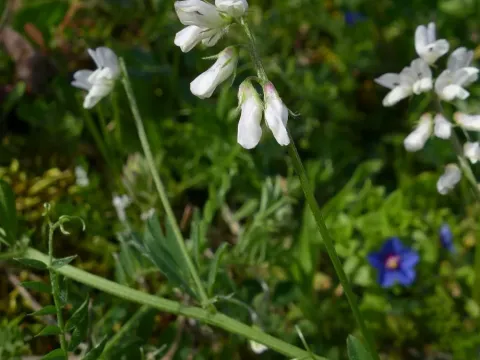
White-flowered vetch
Vicia leucantha
Vicia leucantha, known as white-flowered vetch, is a valuable annual legume used in agriculture for forage and soil improvement. Sowing is typically carried out in early spring, as the seeds are adapted to germinate in cool soil conditions.
What the section contains
White-flowered vetch
The seeding rate is usually between 100 and 140 kg per hectare, depending on the purpose of the crop and soil fertility. It is often sown in rows with a planting depth of 3 to 5 cm to ensure optimal germination and early root development.
In practice, it is often grown in mixtures with cereal crops like oats. This approach provides physical support for the vetch, preventing lodging and facilitating mechanical harvesting of the green mass.
Field preparation involves primary tillage and harrowing to create a fine seedbed. Eliminating weeds before sowing is crucial, as the young seedlings of white-flowered vetch can be outcompeted by aggressive weeds in the early stages.
While spring sowing is standard, in regions with milder winters, it may be planted as a winter cover crop to provide early spring biomass and nitrogen fixation benefits.
The crop is well-suited to temperate climates and demonstrates resilience against minor spring frosts. It prefers stable temperatures and sufficient soil moisture during the active vegetative growth period.
It performs best on fertile loam or sandy loam soils with a neutral or slightly acidic pH. Highly waterlogged or excessively saline soils are generally unsuitable for its development, leading to stunted growth.
Adequate sunlight is essential for optimal growth and seed set. While it can handle some competition, excessive shading should be avoided to maintain the plant's photosynthetic efficiency and vigor.
Phosphorus and potassium fertilizers are often applied to stimulate root system development and enhance nitrogen fixation by symbiotic bacteria. Nitrogen application should be kept minimal to avoid discouraging nodule formation.
Crop rotation is a fundamental requirement, as repeated planting of vetch on the same field can lead to the buildup of soil-borne pathogens and nutrient depletion.
Yields of green mass typically range from 15 to 25 tonnes per hectare, depending on local precipitation and soil quality. It is a highly appreciated fodder crop due to its high protein content and digestibility.
Seed yields generally fall between 1.0 and 1.5 tonnes per hectare under favorable conditions. The pollination process and weather during the flowering period significantly impact the final grain output.
As a green manure crop, it significantly contributes to soil fertility by fixing atmospheric nitrogen, which benefits subsequent grain crops in the rotation cycle and improves soil structure.
The stability of the harvest relies on the use of certified, site-adapted seed varieties that show resilience against local environmental stresses and pests.
Effective management of crop growth stages, particularly ensuring the plant reaches peak biomass before harvesting, is critical for maximizing both quantity and quality of the forage produced.
The crop is susceptible to various pests, with weevils being the most common threat to young sprouts and foliage. Integrated pest management strategies are often employed to monitor and control these populations.
Pea weevils may damage seeds during the maturation process, impacting the quality of the harvested grain. Careful timing of harvest and proper seed treatment are common control measures.
Fungal diseases like ascochyta blight and root rots thrive in humid conditions and dense stands. Maintaining proper planting density and seed disinfection can significantly reduce the risk of outbreaks.
Powdery mildew can affect the leaves towards the end of the season. If the infection occurs late, the impact on forage quality is manageable, but early onset may require intervention.
Nematode pressure is another factor to consider; therefore, maintaining a diverse crop rotation is a key prophylactic measure to protect the plant's root system.
Harvesting for green fodder or hay is ideally performed during the full flowering stage. At this point, the plant contains the highest concentration of essential nutrients and the best balance of biomass.
For seed production, a two-stage harvesting process is recommended. Mowing into windrows allows the crop to dry uniformly, reducing the risk of shattering and moisture-related damage to the seeds.
Post-harvest processing involves threshing and immediate cleaning of the seeds. Removing debris and impurities is essential for successful storage and maintaining the viability of the seed lot.
Storage should occur in a dry, well-ventilated space with moisture levels kept below 15%. High temperatures during storage can degrade seed quality and reduce the germination rate for the next season.
Efficient drying techniques are required to preserve the quality of the harvested material, especially for hay, to prevent mold growth and maintain its nutritional profile for livestock.