
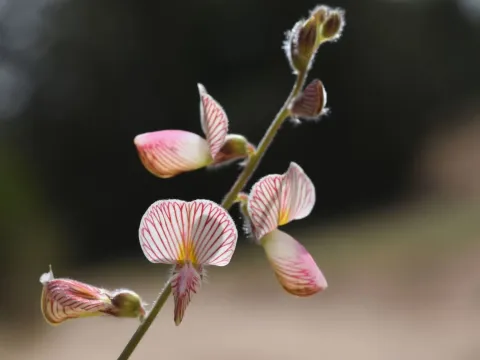
Wettstein's sainfoin
Onobrychis wettsteinii
Wettstein's sainfoin is a resilient perennial legume known for its adaptability to various steppe environments and its value as high-quality forage.
What the section contains
Wettstein's sainfoin
The seeding phase typically takes place in early spring, once soil temperatures are sufficient to support rapid germination and early growth.
Proper seedbed preparation is vital; the soil should be firm to ensure good seed-to-soil contact, which promotes uniform emergence across the field.
Seeding rates must be adjusted based on the specific seed quality and local climatic conditions to optimize the density of the perennial stand.
Precise planting depth ensures that seedlings have enough energy to emerge before exhausting their reserves, securing a strong start for the crop.
This species thrives in well-drained, alkaline soils and is highly dependent on calcium availability for robust growth and nodulation.
As a light-demanding plant, it should be established in open areas without competition from taller vegetation that could shade the developing stand.
Wettstein's sainfoin exhibits exceptional drought tolerance, allowing it to maintain productivity in regions where other legumes might fail due to water stress.
While tolerant of low fertility, supplemental fertilization with phosphorus can significantly enhance the longevity and vigor of the forage stand.
Waterlogging is a major limiting factor for this crop, as it quickly leads to root decay and decreased yields in saturated soil environments.
The primary use of Wettstein's sainfoin is for hay production and grazing, providing a dense, high-protein feed that is highly palatable to livestock.
Yield performance is consistent over several years, making it an economically viable choice for long-term meadow management and soil conservation.
By fixing atmospheric nitrogen, the crop naturally improves soil fertility, benefiting subsequent crops like wheat or barley in the rotation cycle.
The plant also plays a significant role in beekeeping, serving as a nectar-rich species that supports pollinator health in agricultural landscapes.
High nutritional density makes it a preferred forage for enhancing the performance of cattle and sheep, reducing the need for costly grain supplementation.
Common phytosanitary risks include various leaf spot diseases and root rots, which often occur under high humidity or poor soil drainage conditions.
Pests such as clover root curculio can cause damage to the root system, ultimately reducing the plant's ability to withstand drought and winter conditions.
Seed-feeding insects may target the developing pods, necessitating monitoring during the seed production phase to prevent significant harvest losses.
Effective management strategies emphasize crop rotation and the use of resistant varieties to mitigate the impact of localized soil-borne pathogens.
Weed control during the establishment year is crucial to protect the crop from early competition, ensuring the development of a pure and productive stand.
The optimal harvest window for forage is during the early-to-full bloom stage, which provides the best balance of protein content and total biomass.
Proper haymaking techniques, including the use of tedders, are essential to reduce moisture content quickly and preserve the nutritive value of the hay.
When harvesting for seed, producers must wait until pods turn brown to ensure full maturity, adjusting machinery settings to minimize seed shattering.
Avoiding overly late harvest ensures higher digestibility of the forage, as the stems become increasingly lignified if allowed to mature too far.
Following harvest, adequate rest periods are required to allow the plant to accumulate root reserves, which is essential for surviving the winter season.