
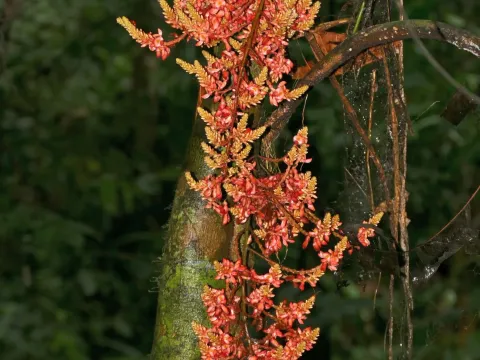
Whitfordiodendron
Whitfordiodendron
Whitfordiodendron is a genus of woody vines belonging to the Fabaceae family. In their natural habitat, seeds germinate primarily when moisture levels rise, typically corresponding with the start of the rainy season.
What the section contains

Whitfordiodendron
For successful cultivation, seeds require scarification to break their tough outer coat. Maintaining a germination temperature between +25°C and +28°C is critical for high emergence rates.
Sowing should take place in nutrient-rich substrates that ensure excellent drainage. Providing a consistent moisture level during the first weeks of growth is essential for seedling vitality.
Vegetative propagation using cuttings is also a common practice. Cuttings must be treated with rooting hormones to ensure healthy root development in a controlled environment.
Transplanting to the final site should only occur when temperatures are stable and the soil has warmed sufficiently, ensuring the young plants are protected from environmental stress.
As a tropical species, Whitfordiodendron thrives in warm conditions and has no tolerance for frost. It requires a stable tropical or subtropical climate to reach its full growth potential.
The crop prefers fertile, well-aerated soils with a neutral pH. Heavy or waterlogged soils can impede root development, so amending the ground with compost or grit is recommended.
Sufficient light is necessary for the development of the vines. While mature plants appreciate bright sunlight, young seedlings often benefit from partial shade to prevent leaf scorching.
Regular irrigation is vital during the growing season. The plant exhibits signs of stress, such as leaf wilting, if the soil is allowed to dry out completely for extended periods.
Providing vertical support structures, such as trellises or poles, is essential because the vines are climbers and require support to grow optimally and access sufficient light.
Spider mites and whiteflies are the primary pests that affect this crop, especially in environments with low humidity where these insects can proliferate rapidly on the foliage.
Fungal diseases, including root rot and powdery mildew, pose a significant risk when irrigation management is poor or if the air circulation around the vines is obstructed.
Effective management includes maintaining a clean growing area and performing regular inspections to catch the early signs of pest infestations or pathogenic activity.
Preventive fungicide treatments are often necessary in high-humidity seasons to protect the plant health and ensure the crop remains productive throughout the year.
- Monitoring for pest presence on the underside of leaves.
- Ensuring adequate spacing between plants.
- Sanitary pruning of dead or diseased branches.