
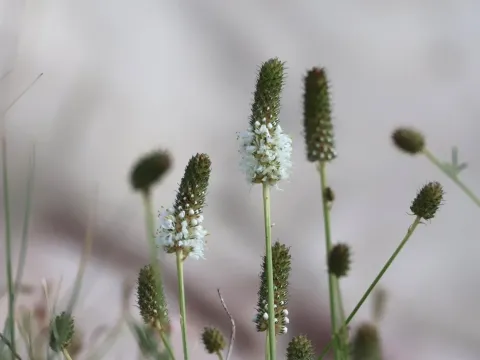
White prairie clover
Dalea candida
Sowing of White prairie clover is typically conducted in the spring when soil temperatures reach 12–15 degrees Celsius. Due to the hard seed coat, scarification is essential to ensure uniform and rapid germination after planting.
What the section contains
White prairie clover
Seeds should be planted at a depth of 1 to 2 centimeters depending on soil moisture levels. Using a row seeding method with spacing between 30 and 45 centimeters provides the necessary room for young plants to establish themselves during the critical early stages.
Determining the correct seeding rate is vital for the long-term success of the stand. For forage or conservation purposes, a density targeting 200–300 plants per square meter is generally recommended to optimize cover and yield.
The species is known for slow initial growth, making weed management in the first year a paramount agricultural task. Providing a clean seedbed free of competing vegetation allows these seedlings to develop the root systems required for later survival.
Fall sowing is only advisable in regions with mild winters where the risk of premature germination followed by freezing is minimal. In most temperate climates, spring planting remains the most reliable method for establishing healthy and productive populations.
White prairie clover belongs to the Fabaceae family and is a long-lived perennial with a deep taproot system. This biological trait makes it exceptionally drought-tolerant and capable of accessing nutrients and water from deeper soil horizons.
This crop requires full sun exposure to thrive, as it is highly sensitive to shading. In shaded conditions, stems become weak, lodging may occur, and the overall biomass production and flowering intensity are significantly hampered.
The plant is not overly demanding regarding soil texture, though it performs best in well-drained sandy, loamy, or rocky soils. Waterlogging must be strictly avoided, as saturated soils quickly lead to root rot and significant stand losses.
It exhibits high adaptability to various soil pH levels, tolerating conditions from slightly acidic to neutral. A primary agricultural benefit is its ability to form symbiotic relationships with nitrogen-fixing bacteria, which naturally enhances soil fertility for subsequent crops.
Native to North American prairies, the species is well-adapted to continental climates. Its inherent hardiness allows it to survive extreme temperature fluctuations, making it a viable candidate for integrated crop systems in various temperate zones.
Fungal pathogens causing leaf spots pose a primary threat to plant health, particularly in periods of high humidity. Significant foliage loss affects the plant's photosynthesis rate and reduces the overall nutritional quality of the forage.
Insects, such as various species of weevils, can target reproductive organs, which is a major concern for those cultivating the crop for seed production. Timely monitoring and biological control methods are the preferred ways to mitigate potential insect-related damage.
Root rot, driven by poor soil drainage and excess moisture, is a lethal factor for established stands. Crop rotation practices that avoid consecutive planting of other legumes on the same field are essential to prevent the buildup of soil-borne pathogens.
Weed competition during the establishment phase is the most common cause of failure in new plantings. Without adequate intervention, young plants are quickly outcompeted for sunlight and soil resources, leading to poor stand density and productivity.
While pollinators are beneficial for the plant's reproduction, they can also bring incidental pests to the field. Regular scouting throughout the growing season, especially during the peak blooming phase, is necessary to maintain a healthy and stable crop population.