
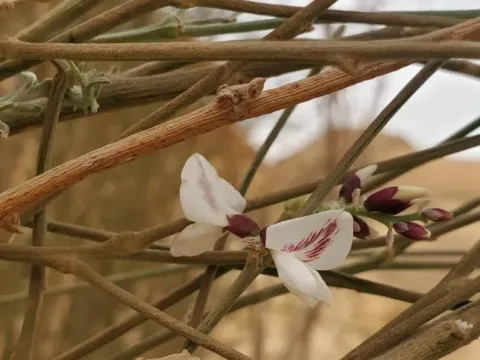
White weeping broom
Retama raetam
Sowing of Retama raetam in its natural habitat typically occurs after the winter rains, when soil moisture is adequate to trigger germination. In controlled agricultural settings, seeds require mechanical or chemical scarification to break the tough seed coat and enhance water uptake.
What the section contains
White weeping broom
The ideal planting time is early spring, which allows the root system to establish itself before the onset of extreme summer heat. Seedlings should be grown in containers with a deep, open structure to facilitate the development of the primary taproot without deformation.
For large-scale afforestation or sand dune stabilization, planting one-year-old seedlings with protected root systems ensures the highest survival rate. These young plants should be spaced according to the specific erosion control requirements of the site.
Although the plant is highly resilient, supplemental irrigation during the first few months after transplanting is recommended to ensure the roots reach the deeper, moister soil layers. Once established, the plants require almost no further human intervention.
Direct seeding in the field can be successful if the timing coincides with seasonal rainfall patterns, though success rates vary based on soil surface stability and the presence of competing vegetation during the initial germination phase.
Retama raetam, a member of the Fabaceae family, is a highly specialized shrub adapted to the harsh conditions of North African and West Asian deserts. It thrives in environments characterized by high temperatures and long periods of drought.
The plant demands well-drained, sandy or rocky soils to prevent root asphyxiation. It cannot tolerate waterlogged conditions, as its root system is adapted to searching for moisture deep within porous substrates rather than dealing with surface water accumulation.
Full sun exposure is critical for the plant's survival and growth. Because its leaves are highly reduced or absent to minimize transpiration, the green stems conduct photosynthesis. Any form of shading drastically impairs the plant's metabolic processes.
The species is remarkably tolerant of saline soils, making it an excellent choice for the reclamation of degraded lands that are unsuitable for conventional crops. It also withstands significant daily temperature fluctuations without any visible stress.
Agrotechnical practices involve minimal soil preparation, focusing mainly on protecting the site from wind erosion and preventing excessive livestock grazing during the vulnerable early growth stages of the shrub.
The primary yield of Retama raetam is environmental rather than nutritional, as it is valued for its capacity to stabilize shifting sands and protect soil from erosive wind forces. Its presence helps create a microclimate that benefits surrounding vegetation.
The plant serves as a vital nectar source for bees during its spring flowering period. The resulting honey is highly regarded, making the shrub a valuable component for apiculture development in otherwise barren desert regions.
While not a primary forage crop, the foliage provides emergency grazing for camels and goats in arid zones. Its nutritional value remains relatively stable, though the plant should be managed with rotational grazing to ensure long-term sustainability.
Medicinal and industrial extracts can be derived from the plant's tissues, though commercial harvesting is usually limited due to the slow growth rate of the shrub in extreme climates. The biomass output is strictly correlated with annual rainfall.
In the context of agricultural improvement, the success of Retama raetam is measured by the reduction of sand encroachment into cultivated fields and the overall increase in local biodiversity supported by the protection of the shrub.
Retama raetam exhibits high resistance to many common pests due to the secondary metabolites and alkaloids present in its stems and tissues. This chemical defense mechanism reduces the need for synthetic pesticides in plantation management.
However, powdery mildew can occur if the plants are grown in areas with poor air circulation or higher-than-average humidity levels. Maintaining appropriate plant spacing and ensuring good airflow are the best preventative measures against fungal infections.
Livestock grazing represents the most significant threat to young plantations. Without effective fencing or grazing management, cattle or goats can easily destroy young stands by consuming the soft, green stems before they become lignified.
Root rot is a critical threat that arises primarily from improper soil selection. Planting in areas with a high water table or poor drainage leads to the rapid decline and death of the shrub, regardless of its age or size.
Seed predation by weevils and other insects can impact the natural regeneration of the species. In nursery conditions, preventative insect control during the fruit-set stage may be necessary to ensure a high-quality seed supply for future planting.