
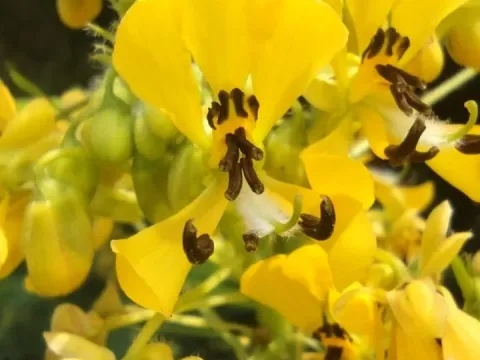
Wild senna
Senna hebecarpa
Wild senna (Senna hebecarpa) is a perennial leguminous plant native to North America, recognized for its medicinal value in providing therapeutic extracts. It belongs to the Fabaceae family and thrives in temperate climates where it can establish a robust perennial root system.
What the section contains
Wild senna
Seed propagation is the primary method for establishing a new plantation. Seeds possess a hard seed coat and require mechanical or chemical scarification to break dormancy and ensure uniform germination across the field.
Planting typically occurs in early spring once soil temperatures are consistently above 12 degrees Celsius. Seeds are sown in rows spaced 50 to 60 centimeters apart to provide enough room for plant development and mechanical weeding operations during the first year.
Seed depth should be kept consistent at 2 to 3 centimeters. Proper moisture levels in the seedbed are essential during the germination phase, as the young seedlings are susceptible to drought until their root systems penetrate deeper into the soil.
The plant grows relatively slowly during its first year, focusing its energy on root development. By the second year, it produces lush foliage and reaches its full height, making it ready for initial harvesting and systematic management.
Wild senna requires fertile, well-draining soil to perform optimally. While it is adaptable to various soil types, sandy loam or well-aerated silty soils with a slightly acidic to neutral pH are considered ideal for high-quality leaf production.
Full sun exposure is a critical requirement for this crop. Adequate sunlight increases the accumulation of anthraquinones in the leaves, which are the main active compounds required by the pharmaceutical industry for herbal laxative preparations.
The crop requires moderate and consistent moisture, especially during the peak growing phase in late spring and early summer. However, waterlogged conditions must be avoided, as they significantly increase the risk of fungal infections and root rot.
Climatic requirements involve a long growing season with sufficient warmth. Although the plant is hardy in many temperate zones, it prefers protected sites where extreme winds or late spring frosts are less likely to damage the developing foliage.
Nutrient management focuses on moderate nitrogen levels and sufficient phosphorus and potassium. These nutrients promote strong stem development and enhance the plant’s ability to survive winter dormancy in colder climates.
Fungal diseases such as leaf spots and powdery mildew are the most common threats to wild senna, particularly when plants are grown in high humidity or overcrowded conditions. Proper spacing is essential to ensure adequate airflow within the foliage.
Pests, including spider mites and various aphid species, can infest the plants and cause significant leaf damage. Integrated pest management strategies are recommended, focusing on early detection and the use of natural predators or soft-chemical interventions.
Root-knot nematodes can also be a hidden threat in certain soil types, weakening the plant and reducing overall yield. Crop rotation with non-leguminous plants is a standard agricultural practice to keep soil pathogen populations under control.
Weed competition poses a significant risk to young stands. Since the plant’s growth rate is moderate initially, weeds can easily outcompete it for nutrients and light, necessitating vigilant manual or mechanical inter-row cultivation.
Field hygiene is paramount; removing crop residues at the end of the season helps reduce the overwintering of pathogens. Maintaining soil health through balanced fertilization prevents the plants from becoming overly stressed and vulnerable to opportunistic infections.
Harvesting wild senna is timed precisely to when the plants are in full bloom. This stage coincides with the maximum concentration of biologically active compounds within the foliage, which is the most valuable part of the crop.
The leaves are harvested by hand or using specialized machinery that clips the foliage while keeping the main stems intact. This ensures the plant remains healthy and can potentially regenerate for subsequent cuttings or survive into the next year.
Immediate processing is crucial once the harvest is completed. Leaves must be dried in controlled environments with adequate ventilation, avoiding direct high-intensity sunlight, which can oxidize the leaves and degrade the potency of the medicinal constituents.
Once dried to the desired moisture level, the leaf material is cleaned of stalks, stems, and any debris. The final product should display a uniform green color, indicating that the processing conditions were optimal and the medicinal qualities are preserved.
Proper storage in airtight, dark containers is necessary to maintain the shelf life of the dried product. Ensuring protection from humidity and heat allows the material to retain its effectiveness during transport and storage before reaching processing facilities.