
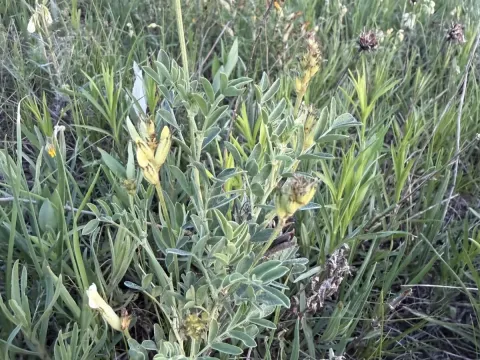
White-stemmed astragalus
Astragalus albicaulis
White-stemmed astragalus (Astragalus albicaulis) is a perennial legume highly valued for its ability to thrive in challenging environments. The sowing process typically begins in early spring when soil temperatures reach 8–10 degrees Celsius, ensuring optimal conditions for seedling germination.
What the section contains
White-stemmed astragalus
Due to the hard seed coat characteristic of many Astragalus species, pre-sowing treatments like scarification are recommended to improve germination rates. Seeds should be planted at a shallow depth of 1–2 centimeters, allowing them to establish a robust root system quickly.
The initial growth phase of the crop is slow, requiring fields to be free of competing weeds. Successful establishment depends on ensuring that young seedlings are not choked by aggressive annual weeds, which is crucial during the first year of the crop's development.
In field production, row planting with a spacing of 15–20 centimeters is standard. This configuration promotes efficient growth, provides adequate space for nutrient absorption, and facilitates the use of mechanical equipment for weed control between rows.
Adding phosphorus-based fertilizers during the planting phase is highly effective. It strengthens the primary root, which is essential for the long-term survival of this perennial crop in varied climatic conditions, as the root depth determines its future drought resistance.
This crop thrives in open, sunny locations with minimal shading. Solar radiation is essential for the photosynthesis process, which directly affects the biomass accumulation and the overall quality of the forage produced by the plant.
White-stemmed astragalus performs best in well-drained loamy or sandy soils. It is particularly sensitive to waterlogging; therefore, avoiding fields with high water tables or poor drainage is a top priority for farmers selecting a site for this crop.
The plant exhibits significant drought tolerance, attributed to its deep taproot system. This makes it an excellent candidate for regions with unpredictable rainfall, as it can access moisture from deeper soil layers that are unavailable to shallower forage crops.
Soil pH levels should ideally be neutral or slightly alkaline. If the soil is too acidic, liming should be performed before planting to enhance the availability of minerals and support the symbiotic relationship with nitrogen-fixing bacteria.
Inoculation with appropriate rhizobial strains is necessary if the soil has not previously supported legume growth. This ensures that the plant can effectively fix atmospheric nitrogen, reducing the need for chemical nitrogen fertilizers and promoting soil health.
Productivity increases significantly after the first year, with the highest yields typically achieved in the third and fourth years. As a perennial crop, it requires a period to fully establish its deep root system before reaching maximum production potential.
Average hay yields typically range from 1.5 to 2.5 tonnes per hectare, though intensive management can lead to higher figures. Factors such as soil fertility, regular monitoring, and seasonal moisture levels are primary determinants of total biomass output.
Post-harvest maintenance, such as light cultivation or fertilization, helps stimulate regrowth. This is particularly important for multi-cut systems, where maximizing the number of seasonal harvests is a key goal for agricultural profitability.
The second cut of the season is often richer in protein, even if the total mass is slightly lower than the first. Utilizing the plant at this stage provides a nutrient-dense food source that is highly beneficial for livestock nutrition throughout the year.
Field performance monitoring helps identify areas where growth may be stunted. Addressing these issues with timely soil enrichment or weed management helps ensure that the field maintains its productivity over its multi-year lifespan.
Pests such as weevils and aphids are common challenges. These insects target the foliage and can significantly reduce the nutritional quality of the forage. Integrated pest management, including monitoring and biological control, is preferred over chemical interventions.
Fungal diseases like leaf spot often emerge during periods of high humidity. The key to prevention is ensuring sufficient air circulation through proper plant density, which prevents the build-up of moisture around the foliage and reduces the risk of infection.
Rotation strategies are crucial in mitigating the build-up of soil-borne pathogens. By rotating white-stemmed astragalus with non-legume crops, farmers can disrupt the life cycles of pests and diseases that are specific to the Leguminosae family.
Chemical control should be applied only as a last resort and strictly according to pre-harvest interval regulations. Protecting the health of the plant is best achieved through balanced fertilization, as stressed or malnourished plants are more susceptible to infestations.
Maintaining a clean field environment by controlling perennial weeds ensures that the crop remains the dominant vegetation. Weeds can act as vectors for various pathogens, making effective field sanitation a fundamental pillar of disease management.
The optimal harvest window is during the period of full bloom. Harvesting at this stage captures the perfect balance between biomass volume and nutritional content, preventing the stems from becoming too lignified or fibrous for effective digestion by animals.
Careful machinery settings are required during cutting to preserve the crown of the plant. A height adjustment prevents damage to the growth points, which is vital for the rapid regrowth and longevity of the perennial stands in the subsequent season.
Efficient drying methods are essential to maintain the vibrant green color and high vitamin levels in the hay. Using mechanical tedders allows for uniform moisture loss, which reduces the time the cut crop spends exposed to potential rain or field humidity.
Storage must involve dry, well-ventilated conditions to prevent mold. Proper stacking prevents self-heating of the bales, which can destroy nutrients and create fire hazards, ensuring the feed stays palatable and safe for long-term use.
Quality checks on moisture levels are performed before moving hay into long-term storage. Ensuring the crop is dry enough prevents spoilage, providing a reliable and stable source of forage for livestock throughout the winter months.