
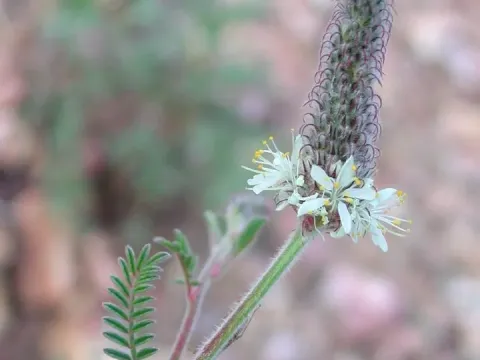
Whiteflower dalea
Dalea albiflora
Sowing of Dalea albiflora typically occurs in the spring when soil temperatures reach an optimal range for germination, usually between 15 and 20 degrees Celsius.
What the section contains
Whiteflower dalea
Seed scarification is highly recommended before planting to break the dormancy caused by the hard seed coat, which significantly increases uniform emergence rates.
Seeds should be planted at a shallow depth of approximately 1 to 2 centimeters, ensuring they are placed in contact with moist soil while remaining close enough to the surface for light penetration.
When sowing on a large scale, using drills with precise depth control is beneficial to maintain consistency across the entire field and minimize resource waste.
Inoculating seeds with appropriate Rhizobium strains is essential to establish effective nitrogen fixation, which supports the plant's growth in low-nutrient soil environments.
Dalea albiflora is a perennial herbaceous plant belonging to the Fabaceae family, recognized for its adaptability to arid and semi-arid environments.
This species is well-suited for sandy and rocky soils, thriving in conditions where other plants may fail due to nutrient deficiency or lack of moisture.
It requires full sun exposure for optimal growth and development, as even partial shade can reduce the density of the foliage and the abundance of blossoms.
The plant demonstrates excellent drought resistance due to its deep taproot system, which allows it to stabilize soil and prevent erosion on vulnerable sites.
It prefers well-drained soil profiles; therefore, avoiding low-lying areas or heavy clay soils that are prone to waterlogging is critical for successful cultivation.
The primary threats to whiteflower dalea are fungal infections associated with high humidity, which can lead to root and crown rots if drainage is inadequate.
Insect pests such as leaf-eating beetles and certain aphid species may occasionally impact the plant's health, particularly during the active growing season.
Weed competition during the establishment phase is a major challenge, as the plant exhibits relatively slow seedling growth compared to common agricultural weeds.
Preventative management, including proper site selection and avoiding excessive nitrogen fertilization, helps maintain plant vigor and natural resilience.
Monitoring for signs of wilting or discoloration is recommended to detect any potential outbreaks early and prevent the spread of diseases across the field.