
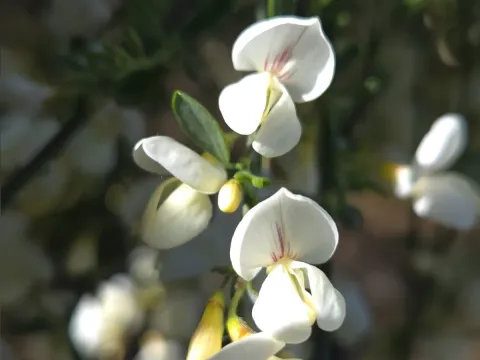
White broom
Cytisus multiflorus
White broom (Cytisus multiflorus) is a striking deciduous shrub from the Fabaceae family. Native to the Iberian Peninsula, this plant has adapted to thrive in sunny, dry environments, often found in open scrublands and rocky slopes.
What the section contains
White broom
Botanically, it is characterized by its numerous slender, arching branches that become completely covered in white, pea-like flowers during the late spring blooming season. Its leaves are small and trifoliate, adding to the fine texture of the overall shrub structure.
The primary soil requirement for this crop is excellent drainage. It performs best in sandy or poor, rocky soils where nutrient levels are low, as these conditions prevent the root system from developing fungal diseases associated with heavy, waterlogged earth.
Climatic requirements focus on full sun exposure to promote dense flowering. While it is hardy in many temperate zones, it prefers protection from harsh, drying winds that can damage the delicate branches during dormant winter months.
Economically, white broom is valued for its ornamental appeal in gardens and its utility in environmental landscaping for erosion control. Its nitrogen-fixing capabilities make it a useful species for rehabilitating degraded or nutrient-poor soils.
The most significant threats to white broom include powdery mildew and leaf spot diseases, which often appear in regions with high relative humidity or limited air circulation around the shrub's center.
Pests such as broom moth larvae can be problematic, as they feed on the foliage and developing buds, potentially causing significant aesthetic damage if left unchecked.
Effective management strategies include proper pruning to allow light and air to penetrate the center of the bush, which significantly lowers the risk of fungal infections.
Gardeners should avoid over-fertilizing with nitrogen, as this encourages excessive succulent growth that is more susceptible to aphid attacks and winter kill.
Routine inspection of the leaves and stems during the growing season allows for early intervention, ensuring that the health and longevity of the plant are preserved.