
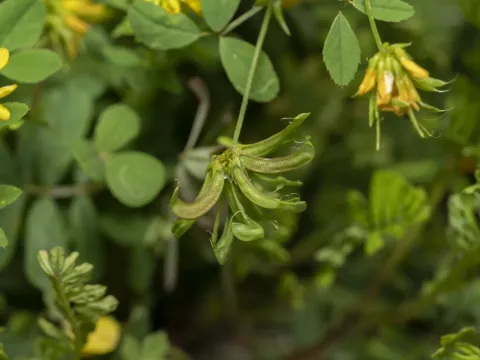
Horned fenugreek
Trigonella balansae
Horned fenugreek is a warm-season crop that thrives in well-prepared soil. Sowing should commence once the soil temperature consistently reaches at least 10–12°C, which usually aligns with mid-spring.
What the section contains
Horned fenugreek
The seeds should be planted in rows with spacing of approximately 20–30 cm. A planting depth of 2–3 cm is recommended to ensure optimal seed-to-soil contact and consistent germination across the field.
Seeding rates generally range from 15 to 20 kg per hectare, depending on the intended use, whether for leafy greens or for seed harvesting, which requires a lower plant density.
Effective seedbed preparation is vital. The field should be free from weed competition, as the crop grows relatively slowly during its early stages and can be easily smothered by aggressive weeds.
In dry conditions, irrigation immediately after planting can significantly improve germination rates. Rolling the field after sowing helps consolidate the soil, promoting moisture retention and uniform seedling emergence.
This crop prefers fertile, well-drained loamy or sandy-loam soils. It is highly sensitive to waterlogging, so fields with excellent drainage are mandatory to prevent root decay.
As a member of the Fabaceae family, Trigonella balansae contributes to soil fertility by fixing atmospheric nitrogen. It is an excellent choice for crop rotation systems due to its soil-improving properties.
Sunlight exposure is critical for the development of essential oils. Ideally, the crop should be grown in open, sunny locations with minimal shading to ensure maximum plant vigor.
Temperatures between 20–25°C are ideal for growth. While moderately drought-tolerant once established, the crop requires adequate moisture during the flowering and pod-filling stages to produce high yields.
Nutrient management should focus on phosphorus and potassium, which support root development and overall plant structure, while nitrogen fixation usually covers the crop's internal nitrogen needs.
The most common disease threat is powdery mildew, which can develop rapidly in humid conditions. Managing airflow through proper spacing is the primary preventative measure.
Root rots caused by soil-borne pathogens can be devastating if the soil remains excessively wet. Ensuring proper soil structure and avoiding irrigation during prolonged rainy periods helps mitigate these risks.
Insect pests include aphids and various leaf-eating insects. Regular field scouting is necessary to catch infestations early and apply targeted control measures when the threshold is exceeded.
Integrated pest management (IPM) practices, such as the use of biological controls and maintaining clean field borders, are recommended to reduce reliance on chemical interventions.
Crop rotation remains the most effective strategy to prevent the buildup of soil-borne diseases. Avoiding legumes in the rotation for at least three years is advised to break infection cycles.
For fresh herb production, harvesting is carried out at the onset of the flowering stage, which ensures the highest concentration of aromatic compounds in the leaves.
Seed harvesting should be timed carefully. Once the pods turn yellow-brown, the crop should be mowed and dried. Delaying the harvest can lead to pod shattering and significant grain loss.
Post-harvest handling requires quick drying at moderate temperatures to maintain quality. Excessive heat during the drying process will result in the loss of volatile essential oils.
Mechanical threshing requires careful adjustment of equipment to avoid damaging the seeds. Clean seeds should be stored in a cool, dry environment to maintain viability and flavor.
The remaining biomass after seed harvest can be incorporated back into the soil as organic matter, providing a sustainable way to manage residues and improve soil structure for future seasons.