
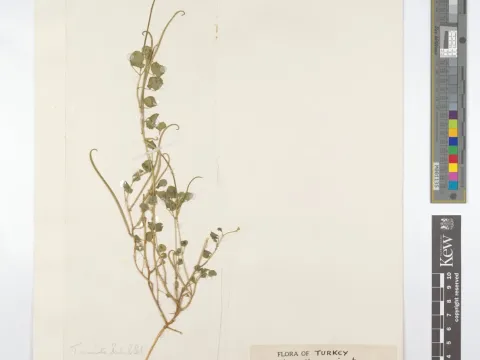
Hooked fenugreek
Trigonella uncinata
Hooked fenugreek belongs to the Fabaceae family. This crop is typically sown in the spring when the soil warms up to 8–10 degrees Celsius at the seeding depth.
What the section contains
Hooked fenugreek
The optimal planting time in most regions is late April or early May. Early sowing allows the crop to utilize soil moisture effectively, which is critical for achieving uniform seedling emergence.
Seeds are sown at a depth of 2 to 3 centimeters using row or narrow-row planting methods. Depending on the purpose, whether for green forage or seed production, seeding rates range from 12 to 18 kilograms per hectare.
The crop is characterized by a relatively slow growth rate in the early stages, making quality seedbed preparation essential. A well-leveled field surface promotes even seeding and facilitates later harvesting operations.
After sowing, soil rolling is recommended to improve seed-to-soil contact and ensure capillary moisture movement to the seeds, significantly increasing field emergence and ensuring a uniform stand.
The plant is quite demanding in terms of light and prefers open, sunny locations. While it shows moderate drought tolerance, high yields are only achieved with sufficient rainfall during the first half of the growing season.
Light loamy or sandy soils with a neutral or slightly alkaline pH are best for this crop. Waterlogged or highly acidic soils lead to significant yield reduction and the development of root rot.
A crucial success factor is the presence of specific nitrogen-fixing bacteria in the soil. For initial cultivation on new land, seed inoculation with appropriate bacterial strains is highly recommended before planting.
The crop responds well to phosphorus-potassium fertilizers, which strengthen stems and improve root development. Excessive nitrogen application can lead to lodging and lower the quality of the seed material.
In crop rotation, hooked fenugreek serves as an excellent predecessor for most cereal crops. It contributes to biological nitrogen fixation and improves the physical and chemical properties of the soil, benefiting subsequent crops.
Economic use of hooked fenugreek focuses on green biomass for forage. With intensive agronomic practices, green mass yields can reach up to 20–25 tons per hectare.
Seed productivity depends on weather conditions during flowering and seed filling. Under favorable conditions, farmers can expect a yield of 0.8–1.2 tons of seed per hectare, which is noted for its high protein content.
Forage quality is determined by the harvest phase; green mass is considered most nutritious during the mass flowering period. Late harvesting leads to coarse stems and reduced overall digestibility for livestock.
Fenugreek biomass contains valuable organic compounds and amino acids, making it a promising dietary supplement for cattle. Using the crop for green forage significantly helps balance the protein content in animal diets.
Seed production requires high-level farming and timely weed control, as the slow initial growth of the plant makes it vulnerable to competition from weeds during the early establishment phase.
Typical pests for hooked fenugreek include weevils, which damage both vegetative parts and developing pods. Various aphid species can also cause significant damage during hot periods of the growing season.
Among fungal diseases, powdery mildew poses the greatest threat, appearing during sharp temperature fluctuations and high humidity. This disease can significantly reduce the photosynthetic leaf surface.
In conditions of high soil moisture, the crop is susceptible to fusarium wilt. Prevention involves strict crop rotation and avoiding over-irrigation, which is a key factor in reducing the pathogen load.
Root bacteriosis occurs on heavy, poorly aerated soils, leading to plant death at early growth stages. Regular mechanical inter-row cultivation helps improve aeration and reduces the risk of pathogen infection.
Monitoring should begin from the appearance of the first true leaves. Early detection of pest hotspots and the application of authorized treatments allow for avoiding widespread infections across the field.
Harvesting for green forage is conducted during the full flowering phase to prevent the reproductive organs from becoming too coarse. Mowing is carried out with choppers for subsequent ensiling or haylage production.
For seed production, harvesting begins when approximately 70–80% of the pods turn brown. Delaying the harvest can lead to pod shattering and significant seed losses directly in the field.
Harvesting technology for seeds includes direct combining or swathing. Swathing is preferred in cases of uneven maturation or heavy weed infestation.
After threshing, seeds require cleaning from plant debris and must be dried to 12–14% moisture. For long-term storage, seeds should be kept in dry, well-ventilated facilities protected from rodents.
Post-harvest residues enrich the soil with organic matter, so it is recommended to incorporate them into the soil using disc harrows immediately after harvesting activities conclude.