
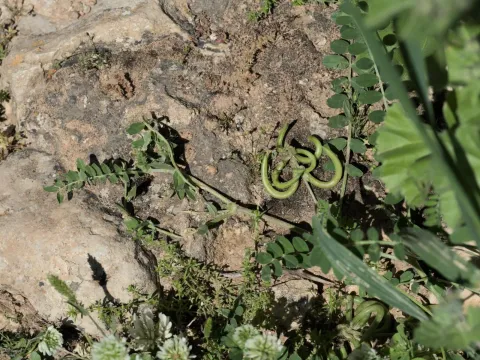
Hooked milkvetch
Astragalus hamosus
Hooked milkvetch is an annual herbaceous plant belonging to the Fabaceae (Legumes) family. In agriculture, this species is valued for its remarkable ability to thrive in poor soils and semi-arid conditions where other forage crops struggle.
What the section contains
Hooked milkvetch
Sowing should be performed in early spring as soon as the soil warms up to 8-10 degrees Celsius. A standard drill seeding method with row spacing of 15-20 centimeters is recommended to ensure optimal plant density and uniform ground cover.
Since the seeds have a hard, impermeable seed coat, scarification is a necessary step before planting. This process significantly improves water absorption, leading to faster and more uniform germination in field environments.
Seed depth should be maintained at 2-3 centimeters in light soils and slightly shallower in heavier clay soils. After sowing, rolling the field with agricultural rollers is advised to ensure firm seed-to-soil contact, which is crucial for successful establishment.
The seeding rate typically ranges from 10 to 15 kilograms per hectare, depending on the intended use. Maintaining this density helps the crop compete effectively against weeds during the vulnerable early growth stages.
This crop is a true xerophyte, native to Mediterranean and Central Asian regions. It possesses a deep taproot system that allows it to access water from deeper soil horizons, making it highly tolerant of prolonged dry spells and seasonal droughts.
Hooked milkvetch is not demanding regarding soil fertility; however, it performs best on loose, well-aerated sandy loam soils. It demonstrates good tolerance to slightly saline and alkaline conditions, which makes it a viable candidate for land reclamation.
High solar radiation is essential for the growth of this species. Shading from neighboring weeds or canopy density can cause stunted growth and reduced leaf development, so selecting open, sunny locations is critical for maximizing biomass production.
The ideal temperature for vegetative growth is between 20 and 25 degrees Celsius. While the plant is quite heat-tolerant, it remains sensitive to sudden late spring frosts during the seedling phase, which should be considered when scheduling planting dates.
As a legume, the plant forms a symbiotic relationship with nitrogen-fixing bacteria. Consequently, nitrogen fertilizer requirements are minimal, allowing farmers to focus on phosphorus and potassium to strengthen the root system and improve seed yield.
Green biomass yield is heavily dependent on moisture availability during the spring growing season. Under favorable conditions, the dry matter yield can reach between 3 and 5 tons per hectare, providing a reliable source of quality forage.
For seed production, yields typically range from 500 to 800 kilograms per hectare with proper care. This makes the crop an attractive option for farmers looking to diversify their agricultural output and seed production portfolios.
The nutritional value is highest in the early growth stages before flowering begins. High protein content makes the green forage particularly suitable for livestock, though plants become more fibrous as they approach full maturity.
Including hooked milkvetch in crop rotations enhances soil structure. Through nitrogen fixation, it enriches the soil with organic matter, acting as an excellent nitrogen-supplying precursor for subsequent cereal crops like winter wheat or barley.
Stability is the hallmark of this crop, especially in arid climates. When traditional perennial grasses suffer from yield drops due to heat, hooked milkvetch maintains consistent growth, providing a vital safety net for regional livestock fodder supplies.
The primary threats to hooked milkvetch involve fungal diseases, such as powdery mildew, which thrive in high-humidity conditions with poor airflow. Good field management and adequate spacing are key to preventing the spread of these pathogens.
Root-knot weevils are a common pest that can severely damage young seedlings. Monitoring during the early growth phase is essential, as heavy infestations can lead to significant crop loss, requiring timely intervention to protect the stand.
Aphid populations can build up rapidly on tender new shoots, draining the plant of essential nutrients. Biological control methods or targeted, selective insecticides should be applied if pest levels exceed the established economic threshold.
Root rot diseases are more prevalent in waterlogged or poorly drained fields. Prevention involves choosing elevated, well-draining sites and strictly adhering to crop rotation schedules to avoid the buildup of soil-borne pathogens.
Seed treatment with professional-grade fungicides is highly recommended before sowing to provide a protective barrier during the critical germination phase. Healthy seeds lead to more vigorous plants that are naturally more resilient to environmental stress.
Harvesting for green fodder should occur during the peak flowering phase to capture the highest nutritional density before the stems become overly lignified. Cutting should be performed 5-7 centimeters above the ground to promote plant health.
When harvesting for seeds, timing is critical because the pods do not ripen simultaneously. Harvest should commence when the majority of pods turn brown to minimize seed loss from natural pod shattering in the field.
After cutting, the biomass should be allowed to dry in windrows to preserve its nutrient quality. This process is essential for producing hay that will remain stable and palatable throughout the winter storage period.
After threshing, seeds must be cleaned of impurities and dried to a moisture content of 12-13 percent. Proper storage in a cool, dry environment ensures that seed viability remains high for up to three years after harvest.
To reduce seed damage during mechanized harvesting, the cylinder speed of the combine should be calibrated to a lower setting. Scheduling harvest activities for early morning or late evening, when humidity is higher, can help prevent unnecessary pod shattering.