
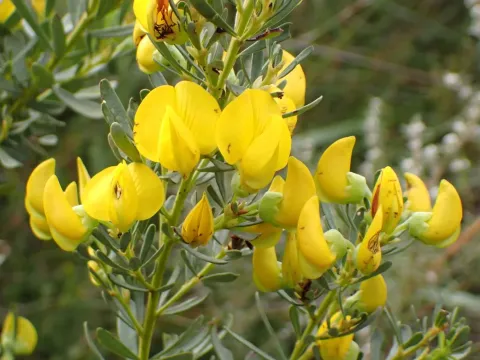
Honeybush
Cyclopia Vent.
Cultivating honeybush, scientifically known as Cyclopia, requires an understanding of its unique biological cycle. Seeds are notoriously difficult to germinate due to their hard, impermeable coat.
What the section contains
Honeybush
To overcome dormancy, producers often use scarification or heat treatment methods that mimic the natural wildfires prevalent in the plant's native Cape habitats.
Seeds are typically sown in professional nursery environments using well-draining, acidic substrates. Careful management of water levels is critical to prevent damping-off disease in delicate seedlings.
Transplanting into open fields takes place when the plants are sufficiently robust, usually between 6 to 12 months of age. Spacing is crucial to ensure airflow and mitigate the risk of fungal infections.
Initial weed management is vital during the first year, as honeybush seedlings exhibit a slow growth rate and can be easily outcompeted by aggressive weeds.
Honeybush is a member of the Fabaceae family and is endemic to the coastal and mountainous regions of South Africa. It thrives in nutrient-poor, sandy, and acidic soil conditions.
The plant requires a cool climate with moderate seasonal rainfall. It does not tolerate extreme heat or waterlogged soils, which can lead to rapid root decay and plant mortality.
A successful plantation relies on the presence of symbiotic nitrogen-fixing bacteria in the soil. When establishing new plots, inoculation may be required to ensure the plant's nutritional health.
Honeybush is sensitive to heavy frost, limiting its large-scale cultivation to specific microclimates with stable temperatures. The altitude range usually spans from 500 to 1500 meters.
Minimal fertilization is generally recommended. Excessive use of phosphorus-based fertilizers can disrupt the delicate balance between the plant and its symbiotic soil microorganisms.
The yield potential of a honeybush plantation matures after the second year. Sustainable harvesting techniques allow these shrubs to produce reliable yields for over a decade.
Annual biomass production depends on the species selected, soil quality, and rainfall levels. Proper pruning is essential to encourage new vegetative growth for the following season.
Over-harvesting is a common error that can cause permanent damage to the shrubs. Selective cutting ensures that the structural integrity of the plant is maintained, protecting its long-term viability.
Productivity metrics are typically measured by the dry weight of the fermented product. Efficient processing is the key to maximizing the commercial return from the harvested raw material.
Regular monitoring of plant vigor allows growers to schedule rejuvenating pruning cycles, ensuring a consistent supply of quality material throughout the plantation's lifespan.
Fungal pathogens represent the most significant threat to honeybush, particularly species that target the root system. These infections are often exacerbated by poor drainage and excessive moisture.
Various pests, including aphids and specific beetles, can inflict damage on young shoots. Integrated pest management strategies are preferred to maintain the crop's organic status.
Weeds are the primary competitors for soil moisture and nutrients. Without adequate weed suppression, especially in the early stages, plantation survival rates drop significantly.
Wild animals, particularly rodents and small mammals, can damage the bark and tender stems. Fencing is a standard requirement for protecting new plantings from local fauna.
Strategic site selection and crop rotation practices are vital to minimize disease pressure and ensure that the soil remains healthy for long-term production cycles.
Harvesting honeybush involves the manual cutting of stems and leaves. This labor-intensive process is necessary to avoid causing mechanical injury to the primary woody frame of the shrub.
Once collected, the raw plant material is shredded to uniform sizes, which facilitates the fermentation process—a critical step that develops the distinct sweet, honey-like aroma.
Fermentation involves high-temperature oxidation in controlled chambers. This stage transforms the chemical composition, reducing tannins and enhancing the tea's flavor profile.
After fermentation, the material is dried to specific moisture content levels. Proper drying is essential to prevent mold growth and ensure the product remains stable during storage.
The final processing stage includes cleaning to remove any debris, followed by professional grading and packaging, readying the herbal tea for market distribution.