
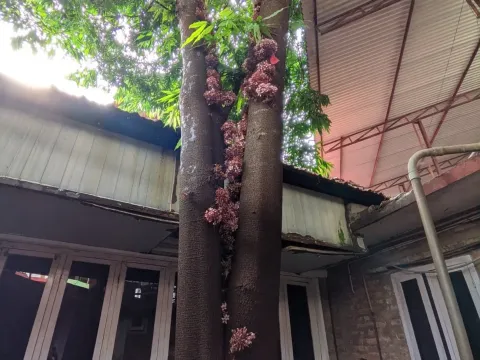
Humboldtia
Humboldtia
Humboldtia is a genus of tropical trees and shrubs belonging to the Fabaceae family, primarily native to the rainforest regions of the Western Ghats in India.
What the section contains

Humboldtia
The plant thrives in a tropical climate characterized by consistently high temperatures, which necessitates greenhouse cultivation in temperate climate zones to ensure survival.
Optimal growth conditions involve rich, well-draining soil mixed with organic matter to maintain high moisture levels without waterlogging the root system.
The species prefers dappled light or semi-shaded environments, mimicking its natural habitat under the canopy of dense tropical forests where light intensity is filtered.
A distinctive feature of many Humboldtia species is their role as myrmecophytes, developing specialized structures that harbor ants, which in return protect the host plant from herbivorous insects.
In cultivation, the primary threats include root rot caused by improper drainage and excessive watering, which are particularly detrimental to the plant's delicate root structure.
Common indoor pests such as spider mites, mealybugs, and scale insects can cause significant damage if the humidity levels and ventilation are not managed correctly.
Fungal infections, such as powdery mildew or leaf spot, frequently emerge in stagnant air environments, necessitating regular air circulation in greenhouses.
The absence of natural ant colonies in a controlled agricultural or domestic setting exposes the plant to increased herbivory, requiring mechanical or biological pest control measures.
Nutrient deficiencies or improper soil pH can lead to chlorosis, manifesting as yellowing leaves, which negatively impacts the ornamental and physiological health of the specimen.