
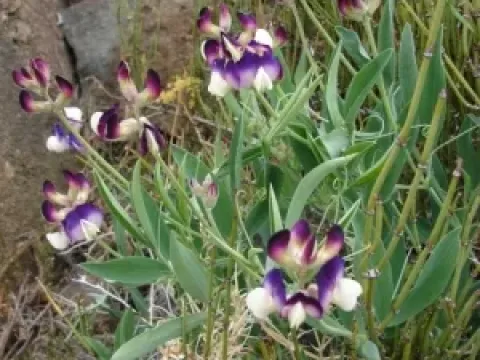
Hooker's pea
Lathyrus hookeri
Sowing this crop is recommended in early spring as soon as the soil warms up to +5...+8 degrees Celsius. Providing sufficient moisture in the seedbed is essential for uniform germination, as the seeds possess a thick seed coat.
What the section contains
Hooker's pea
Seed planting depth typically ranges from 3 to 5 centimeters, depending on the soil texture. In lighter, sandy soils, a slightly deeper planting depth is permitted to prevent the seeds from drying out during the critical germination phase.
The seeding rate is calculated based on the intended use of the crop, averaging between 120 and 150 kilograms per hectare using row seeding methods. Maintaining optimal plant density is crucial for ensuring the development of high-quality biomass.
To improve germination rates, it is recommended to subject seeds to pre-sowing treatments, such as scarification or soaking in growth stimulants. This reduces the germination period and helps young seedlings withstand adverse environmental conditions.
In large-scale commercial farming, the use of precision seed drills is recommended to minimize plant-to-plant competition for nutrients and sunlight during the initial stages of vegetative development.
Hooker's pea belongs to the Fabaceae family and has specific soil fertility requirements. The crop thrives best in structured chernozem or loamy soils with a neutral to slightly acidic pH level.
The plant demonstrates moderate drought tolerance; however, achieving maximum vegetative productivity requires stable moisture levels during the active growth phase. Waterlogging or stagnant water can lead to root system decay and crop failure.
The crop prefers open areas with good sunlight exposure, as significant shading leads to stem elongation and reduced biomass quality. It is ideally suited for regions with a temperate climate and distinct seasons.
A key success factor is the presence of specific nodule bacteria in the soil that facilitate nitrogen fixation. When sowing on new fields, it is highly recommended to inoculate the seeds with appropriate rhizobia strains.
The optimal temperature range for growth is +18...+22 degrees Celsius. While the plant can tolerate minor late frosts, drastic temperature fluctuations during the flowering phase can negatively impact pod set and fruit formation.
The average yield of green biomass for Hooker's pea, when proper agrotechnical measures are followed, ranges from 15 to 25 tons per hectare. This indicator is heavily dependent on water availability and soil nitrogen content.
When grown for seed production, yields typically reach 1.5–2.5 tons per hectare. Timely harvesting is essential to minimize losses caused by the natural shattering of pods as they reach full maturity.
Improving soil structure and applying phosphorus-potassium fertilizers during the budding phase significantly boosts vegetative growth. Proper fertilization also enhances the nutritional value of the resulting forage material.
The period from sowing to full seed maturity lasts from 90 to 120 days, depending on the agro-climatic zone. In northern regions, maturation may be delayed due to shorter daylight hours and lower mean daily temperatures.
To maximize yields in crop rotation, it is recommended to plant Hooker's pea after winter cereals. It serves as an excellent precursor crop, leaving behind significant amounts of biological nitrogen for the following season.
The primary threats to the crop include fungal diseases such as ascochyta blight and powdery mildew, which thrive under high humidity and dense planting conditions. Prevention involves maintaining optimal seeding rates and spatial isolation.
Among pests, nodule weevils and aphids are the most common, feeding on young leaves and growth points. During severe outbreaks, the application of systemic insecticides in accordance with regulatory guidelines is necessary.
Root rot may occur due to poor field drainage or systematic waterlogging. This leads to vascular system damage and causes plants to wilt during the hottest parts of the day.
Seed weevil infestations require careful management during seed storage. Mandatory preventive measures include timely fumigation of the seed stock and maintaining low humidity levels within storage facilities.
To prevent the spread of infections, agronomists strongly advise adhering to crop rotation schedules, ensuring the crop does not return to the same field for at least 3–4 years to break the life cycles of specialized pests and pathogens.
Harvesting for green biomass is conducted at the full flowering stage, when the protein concentration in the plant reaches its peak. Modern forage harvesting equipment allows for rapid mowing and chopping for subsequent silage or haylage production.
When harvesting for seeds, it is important to wait until the pods have turned brown. Harvesting begins when seed moisture content drops to 14–16 percent, which helps avoid grain damage during the threshing process.
Using a swathing method (mowing into windrows followed by pickup) is justified in cases of uneven ripening or high weed infestation. This facilitates more uniform seed maturation under fluctuating weather conditions.
Threshing machine settings should be adjusted with precision to minimize the percentage of micro-cracks on the seed coat, which are critical for maintaining germination viability during long-term storage.
Post-harvest processing involves cleaning the seed material using grain cleaning machinery and drying it to a moisture content of 12 percent. Storage must occur in dry, well-ventilated areas to prevent overheating and mold development.