
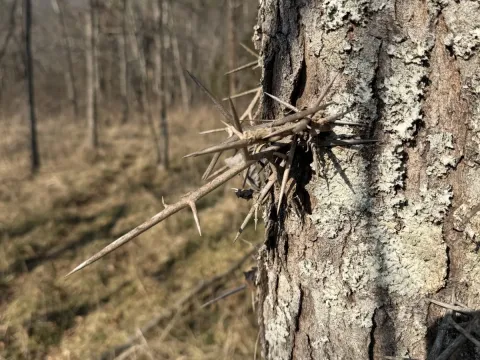
Honey locust
Gleditsia L.
Honey locust seeds require mechanical scarification or hot water treatment before sowing to break their tough outer dormancy.
What the section contains


Honey locust
Spring is the preferred time for planting once the soil temperature is consistently above 12 degrees Celsius to ensure rapid germination.
Seeds should be sown at a depth of 3 to 5 centimeters in well-prepared, loose soil to prevent desiccation during the early development stage.
For nursery production, seeds are typically placed in rows with enough space to allow for easy mechanical weeding and later transplantation.
Consistent moisture is critical during the first few weeks following sowing until the seedlings establish a deep, primary root system.
As a member of the Fabaceae family, Gleditsia is highly valued for its ability to fix nitrogen and improve overall soil health.
This tree is remarkably drought-tolerant, capable of thriving in harsh climates where other species might fail due to lack of water.
Sunlight is a key requirement, as the species is intolerant of deep shade and produces the best growth in full solar exposure.
The honey locust is adaptable to diverse soil conditions, showing high tolerance to salinity, alkaline soils, and varying mechanical compositions.
Established trees are cold-hardy, although young specimens may require some protection from severe frost during their first winter.
The yield potential of Gleditsia includes high-quality, dense timber, which is highly sought after for furniture and construction applications.
The seed pods are a nutritional treasure, rich in sugars and protein, serving as an excellent supplement for livestock feed production.
Properly managed stands can produce significant biomass, providing windbreaks and preventing soil erosion while generating profitable harvest.
Nutrient-rich foliage and pods can be harvested annually, contributing to a diversified farm economy and enhanced animal nutrition.
Over the long term, Gleditsia plantations offer consistent returns through both wood harvesting and the collection of nutritional pod harvests.
While generally robust, honey locust trees can occasionally face challenges from powdery mildew, particularly in humid and poorly ventilated sites.
Common pests like aphids or spider mites might appear during dry spells but usually do not cause significant long-term damage to healthy trees.
In some regions, borers can be a concern for weaker trees, making proper site selection and tree maintenance essential for prevention.
Good silvicultural practices, including proper spacing and thinning, are the best defense against major outbreaks of diseases or pests.
Regular monitoring of the canopy health allows farmers to intervene early if localized infestations occur, ensuring the longevity of the stand.