
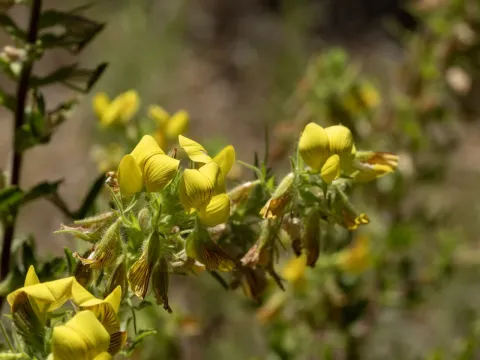
Yellow restharrow
Ononis natrix
Yellow restharrow (Ononis natrix) is a perennial herbaceous plant belonging to the Fabaceae family, commonly found in sunny, dry habitats across Europe and parts of Asia.
What the section contains
Yellow restharrow
Cultivation starts with seeds, which require stratification to break dormancy. Sowing is typically performed in early spring as soon as the soil is workable and slightly warm.
The seeds are sown at a shallow depth of about 1.5 to 2 centimeters. Maintaining sufficient soil moisture during the germination phase is critical for successful establishment.
The plants grow slowly in the first year, establishing a deep root system. During this phase, it is vital to keep the rows free of weeds to ensure the plant receives enough light.
Once established, Ononis natrix is highly resilient, developing woody stems and characteristic glandular hairs that provide the plant with its unique defensive chemical profile.
The plant thrives in well-drained, sandy or gravelly soils. It is well-adapted to alkaline or neutral soil conditions, showing poor performance in heavy, waterlogged clays.
Sun exposure is the most important factor for the health of yellow restharrow. Full sun ensures the development of the essential secondary metabolites for which the plant is grown.
The species is highly drought-tolerant once mature. It can survive long periods without rainfall, making it an excellent candidate for regions with arid climates or poor soils.
Fertilizer requirements are low. Excessive nitrogen application can lead to lush leaf growth but may decrease the concentration of active substances in the roots.
Proper ventilation is necessary to prevent fungal growth, especially in climates with high summer humidity, so appropriate spacing between rows should be maintained.
The primary economic focus of yellow restharrow is the production of medicinal roots. These are traditionally harvested from established plants in their second or third year.
Under optimal farming conditions, the crop can yield significant biomass. The roots are valued for their diuretic and anti-inflammatory properties used in herbal medicine.
Above-ground parts (aerial parts) can be harvested during the peak flowering season, which occurs from early summer through late August, providing additional market value.
Post-harvest processing is key; the roots must be carefully cleaned of soil, cut to manageable sizes, and dried promptly at moderate temperatures to maintain quality.
The global demand for natural herbal ingredients makes the cultivation of Ononis natrix a niche but potentially profitable agricultural venture for specialized farms.
Yellow restharrow is generally robust, but it can be susceptible to root rot if the soil conditions are not well-drained, leading to significant yield losses in wet years.
Pests like aphids and certain species of weevils can cause damage to the leaves and developing stems, especially if the plants are stressed by drought or nutrient imbalance.
Powdery mildew is a common fungal issue that can emerge in dense, poorly ventilated plantings. Control measures focus on cultural practices and preventive spacing.
Integrated Pest Management (IPM) is recommended, utilizing mechanical weed control and crop rotation to minimize the need for synthetic pesticides.
- Regular inspection for pest colonies.
- Avoidance of over-watering.
- Proper crop rotation cycles.
The harvest of the roots is conducted in late autumn, once the plants have entered dormancy, ensuring the highest concentration of active compounds is preserved.
Mechanical harvesting equipment, such as deep-digging ploughs, is used to lift the roots. This must be done carefully to prevent damage to the primary root structures.
After removal, roots are washed to remove soil and debris, trimmed of any necrotic tissues, and processed for drying in controlled environments to avoid mold.
The flowering tops are collected during the mid-summer months. These are dried in thin layers under shade to ensure that the volatile oils are not lost due to excessive heat.
Proper storage is essential; the dried product should be kept in breathable, moisture-proof containers in a cool and dark place to maintain shelf life for several years.