
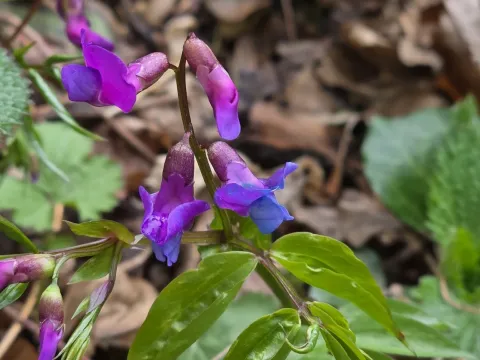
Spring vetchling
Lathyrus vernus
Spring vetchling (Lathyrus vernus) is a perennial herbaceous species belonging to the Fabaceae family. Native to the forests of Europe and parts of Asia, this plant is valued for its early spring development and ability to thrive in shaded environments.
What the section contains
Spring vetchling
The species requires well-drained, humus-rich soil to reach its full potential. It prefers neutral to slightly acidic soil conditions, which support the symbiotic nitrogen-fixing bacteria residing in its root system.
Botanically, it is characterized by a sturdy rhizome and erect stems reaching heights between 20 to 50 centimeters. Its foliage consists of alternate, pinnate leaves, and the inflorescences produce vibrant violet flowers that attract early-season pollinators.
Regarding climate requirements, the plant shows strong adaptation to temperate zones. It is a spring ephemeral, meaning it completes its rapid growth cycle before the forest canopy fully closes, taking advantage of soil moisture and cool air temperatures.
From an agricultural perspective, while its use as a fodder crop is restricted by the presence of certain anti-nutritional factors in fresh green tissue, it remains a significant ecological component in sustainable forestry and apiary management.
Pathogenic threats for this crop include various species of powdery mildew, which tend to proliferate when air circulation is poor or humidity levels remain consistently high during the spring growth phase.
Root rot represents another significant concern, primarily occurring in poorly drained soils where water stagnation leads to root hypoxia and subsequent fungal infections that weaken the entire plant structure.
Insect pests, particularly weevils of the Sitona genus, are known to target the leaf tissue and developing nodules, potentially reducing the plant's nitrogen-fixing efficiency over time.
To mitigate these risks, farmers and growers should prioritize maintaining optimal plant spacing and ensuring that the soil structure provides adequate aeration to suppress fungal development.
Monitoring for signs of stress, such as yellowing leaves or stunted growth, should be conducted regularly throughout the growing season to implement targeted protective measures when necessary.