
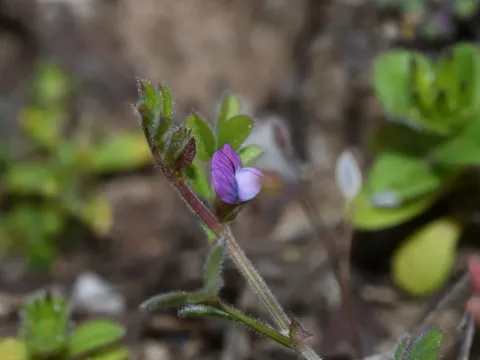
Spring vetch
Vicia lathyroides
Spring vetch (Vicia lathyroides) is a small annual legume species that belongs to the Fabaceae family and is commonly found in temperate regions of Europe and Western Asia.
What the section contains
Spring vetch
The species is well-adapted to dry, sandy soils and typically thrives in habitats with low nutrient content, such as dry grasslands, open slopes, and coastal dunes.
Its life cycle is specifically tuned to the spring season; as an ephemeral, it completes its growth, flowering, and seed set before the summer heat and drought arrive.
From an agronomical perspective, it is considered a hardy plant that does not require intensive fertilization due to its ability to fix atmospheric nitrogen via root nodules.
Although not a primary high-yield crop, its role in ecological restoration and as a source of biodiversity in pastures makes it a point of interest for researchers.
Like many legumes, Vicia lathyroides can be affected by fungal pathogens such as rusts and powdery mildew, particularly in environments with poor air circulation.
Root rot is a significant threat during periods of waterlogging, which the plant is not physiologically adapted to survive, leading to rapid decay of the root system.
Pea aphids and various weevil species are known to feed on the foliage and developing seeds, which may reduce the viability of the next generation of seeds.
Agricultural management should focus on maintaining a balanced soil structure to prevent pathogen buildup while ensuring the plant's natural competition is managed.
Biological threats are generally handled through integrated pest management strategies, although the small scale of this plant often requires minimal intervention.