
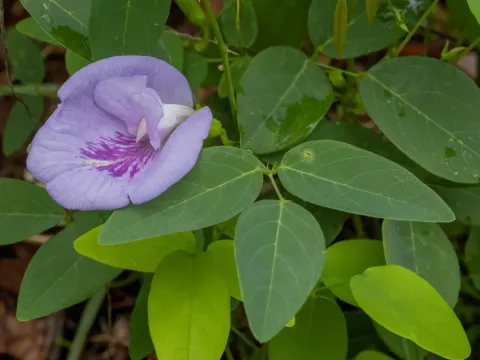
Spurred Butterfly Pea
Clitoria mariana
The Spurred Butterfly Pea (Clitoria mariana) is a perennial legume belonging to the Fabaceae family. Native to North America, it is widely distributed across various habitats, ranging from dry, sandy woodlands to open prairie remnants, demonstrating high adaptability to varying environmental conditions.
What the section contains
Spurred Butterfly Pea
Botanically, the plant is characterized by its trifoliate leaves and distinctive large, showy flowers with a unique structure that differentiates it from other legumes. Its deep taproot system allows the plant to access subsoil moisture, ensuring survival during intense summer heat and drought.
Success in cultivation requires well-drained, sandy or loamy soils with a near-neutral pH. The plant is highly photophilic and requires full exposure to sunlight; shade should be avoided as it leads to weak stems and significantly reduced biomass production.
As a legume, Clitoria mariana forms symbiotic relationships with Rhizobium bacteria. This nitrogen-fixing capability makes it an excellent candidate for sustainable agricultural systems, where it helps restore soil fertility and improve the nitrogen balance of the field.
Management of the culture involves careful soil preparation to ensure good aeration. Once established, the plant is remarkably hardy, returning each spring from its crown, provided that the soil is not prone to winter waterlogging, which the species finds detrimental to its root system.
Root rot remains the most significant threat to the culture, typically occurring in poorly drained soils or during prolonged periods of heavy rain. Ensuring adequate drainage is the primary cultural control measure to protect the plant's structural integrity.
Foliar pests, including aphids and various species of beetles, can infest the plants during active growth stages. Integrated pest management strategies, emphasizing the use of natural predators, are recommended to maintain ecological balance within the planting area.
Powdery mildew can develop on leaves under conditions of high relative humidity and poor air circulation. Thinning stands to ensure better airflow and removing infected debris at the end of the season are effective preventive techniques against fungal outbreaks.
Seed-feeding insects often target the developing pods, posing a risk to seed quality. Proper timing of the harvest, once the pods are fully mature and dry, helps mitigate the impact of these pests on the final yield of the seed crop.
Weed competition is particularly critical during the establishment year. Mechanical weed control or the use of specific mulch layers can provide the necessary competitive advantage for the young plants to establish their root systems effectively.