
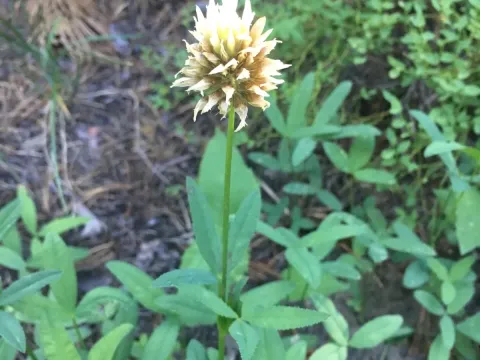
Rydberg's clover
Trifolium rydbergii
Rydberg's clover (Trifolium rydbergii) is a perennial herbaceous plant belonging to the Fabaceae family. Native to the mountainous regions of North America, it is particularly adapted to moist meadows and riparian zones within high-altitude ecosystems.
What the section contains
Rydberg's clover
The plant thrives in well-drained but consistently moist soil conditions. It prefers neutral to slightly acidic soil environments and is known for its ability to fix atmospheric nitrogen, contributing to soil fertility in alpine or subalpine forage systems.
Botanically, the plant features trifoliate leaves and dense floral heads. Its root system is robust, which allows it to persist under challenging environmental conditions and play a role in stabilizing soil in erosion-prone areas.
Climate requirements include a preference for cool to moderate temperatures during the growing season. While it exhibits tolerance to cold winters, it requires adequate soil moisture during the spring thaw and summer months to maximize biomass production.
In terms of agricultural utility, Rydberg's clover is primarily used as a component of forage mixtures. Its high protein content makes it an excellent choice for improving the nutritional quality of hay and grazing land for livestock.
The most common disease impacting Trifolium rydbergii is powdery mildew, which often appears in stands with poor air circulation or excessive canopy humidity. Thinning the stand through managed grazing or early harvesting can mitigate this risk.
Clover root curculio and other weevil species can inflict damage by feeding on both roots and foliage. Implementing a crop rotation strategy is often the most effective method for suppressing these pest populations.
Rust diseases are also known to affect the clover, particularly when late-season humidity levels rise significantly. Early detection and harvesting before the spread of fungal spores are critical management techniques.
Nematode infestations can occur in certain soil types, leading to stunted growth and reduced vigor. Ensuring healthy soil structure and promoting microbial activity can naturally suppress these subterranean threats.
To minimize overall crop threats, it is essential to monitor the plant's health periodically. Maintaining a balanced plant density prevents the microclimate conditions that favor the rapid spread of pathogens.