
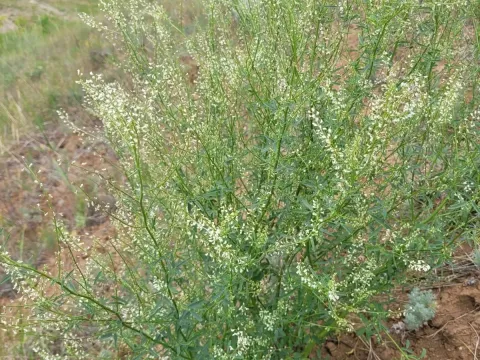
Russian melilot
Melilotus wolgicus
Russian melilot belongs to the Fabaceae family. It is a biennial plant, well-known for its extreme adaptability to harsh environments and its capacity to restore soil health.
What the section contains
Russian melilot
The optimal time for sowing is early spring as soon as the soil is workable. Late autumn sowing is also a viable option to facilitate natural stratification of the seeds.
The seeding rate varies depending on the purpose and sowing method. For standard row drilling, approximately 12–16 kg per hectare is the recommended rate.
Correct planting depth is crucial for germination. Seeds should be planted at a shallow depth of 1–2 cm, as they are relatively small and need to emerge quickly.
Scarification of the seeds before planting is essential to overcome natural seed coat dormancy, which is typical for many Melilotus species.
This crop is highly resilient and thrives in poor soil conditions, including saline, stony, and sandy soils where other legumes struggle to survive.
Russian melilot is characterized by excellent drought tolerance and salt resistance. Its robust root system reaches deep into the soil to access water reserves.
The plant requires full sun exposure for optimal growth. Shaded areas will significantly reduce the biomass production and overall quality of the forage.
It is winter-hardy and well-adapted to varied climatic conditions, making it suitable for cultivation in regions with cold winters and short growing seasons.
Successful establishment relies on the presence of specific nitrogen-fixing bacteria in the soil that form symbiotic relationships with the root system.
The yield of green biomass depends on moisture availability. In favorable years, the crop can produce between 250 and 350 centners per hectare.
For hay production, typical yields range from 50 to 80 centners per hectare, provided the crop is mowed at the right stage to maintain nutrient quality.
Seed production is an important aspect of the crop, with yields ranging from 4 to 8 centners per hectare depending on management practices.
The crop is highly valued for hay and silage production, as well as serving as a green manure to enrich the soil with nitrogen and organic matter.
Russian melilot is an excellent honey plant. A single hectare of this crop can support high volumes of nectar collection for honeybee colonies.
Russian melilot is generally resistant to most common diseases affecting legumes, which makes it a low-maintenance crop for sustainable agriculture.
Root rot is the primary concern, particularly in poorly drained soils where water stagnation occurs, creating a favorable environment for fungal growth.
Pests such as weevils may feed on the seedlings or leaves, potentially causing damage during the early establishment phase of the plant.
Aphid infestations can occur during hot, dry spells, though they rarely reach levels that cause total crop failure unless the plant is already stressed.
- Maintain proper field drainage.
- Use certified, scarified seeds.
- Monitor for pest activity in early spring.
- Avoid over-saturation during the growing season.
For forage purposes, harvesting should take place at the beginning of the flowering stage to ensure the highest protein and nutrient content.
When producing hay, careful handling is necessary to prevent the loss of leaves, which contain the most valuable nutrients for livestock feed.
Seed harvesting is usually done using a two-stage method: mowing into windrows to let the seeds reach full maturity before threshing.
Farmers must be vigilant as pods can shatter easily when over-matured. Timely harvesting is key to minimizing seed loss on the field.
Stored seeds must be kept in cool, dry conditions to maintain viability and prevent the development of mold, which can destroy the batch.